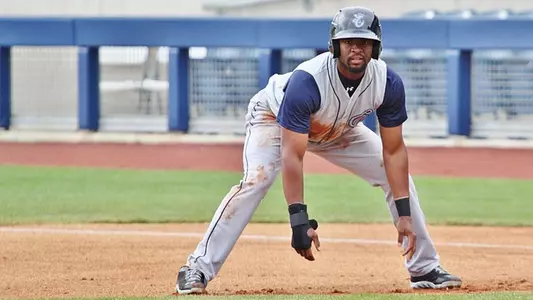
SE: Austin Wates Excited to Reunite with Hughes, Rebuild K-State Baseball Together
Jun 29, 2018 | Baseball, Sports Extra
By Corbin McGuire
There seems to be some sort of gravitational pull between Austin Wates and K-State head baseball coach Pete Hughes. Wherever one goes, the other tends to somehow follow. Success usually comes next.
Most recently Hughes, K-State's head baseball coach, hired Wates, his former player at Virginia Tech, as an assistant for the Wildcats.
Wates spent the last two years working as a Major League Baseball scout for the Seattle Mariners in Austin, Texas. Hughes, a proven head coach with more than 600 wins to his name, came to K-State after helping Georgia reach an NCAA Regional as a volunteer assistant.
"I always thought that someday I would want to work in college baseball in some capacity, but when I got that phone call, my wife and I were extremely thrilled," Wates said. "We thought there wasn't a better opportunity out there than this one."
The fact that he's reuniting with his former head coach does not surprise Wates. Their history together speaks to his reasoning.
When Wates moved from Seattle, Washington, to Virginia before his junior year of high school, his recruiting took a hit. Ultimately, Hughes, who had taken the Virginia Tech job the previous summer, discovered Wates, believed in him and convinced him to come play at Virginia Tech.
"He ended up being there in the end and helped impact me as a person. That's kind of Pete's style," Wates said. "Pete likes to get into the emotional side of the players. He likes being there for guys. Anybody that's played for Pete, any players, they'll say the same thing. That's always gravitated me toward him."
After three stellar seasons at Virginia Tech, Wates was picked in the third round of the 2010 MLB Draft. He worked his way up to the Triple-A level in 2013 for the Oklahoma City Dodgers. Around the same time, Hughes was hired as Oklahoma's head coach.
Cue their first opportunity to reconnect.
"I was fortunate enough that he had an extra room in his house and they were living in Norman and I was playing in Oklahoma City," Wates said. "He invited me to stay with them for as long as I wanted, and I got to know his family really well."
Now, about five years later, the two are back together in a different capacity.
Wates, in charge of hitters, outfielders and base runners at K-State, said he's ready to apply all of the lessons learned from his journey to his new coaching role.
Specifically, his time as a scout, he said, added to the large database of players he's seen. In turn, the two-year experience offered him a better idea of the type of talent it takes to win in the Big 12 Conference.
"I've gotten to see the top teams in the Big 12 and a lot of really good college baseball players. I think as far as what scouting has taught me, I know generally what works," he said. "To be able to identify those things that do and don't work is something I got to learn through that professional scouting lens."
Aside from relentless recruiting, Wates said the first step in building a program back up is becoming fundamentally sound defensively — a trademark of Hughes-led teams.
"That can lose you and win you a lot of ballgames at the same time," Wates said. "That's where it will all start. I think that's what we're most excited about."
Wates learned this program-building formula at Virginia Tech. In his freshman season, the Hokies won 23 games. His junior year, they finished with 40 victories and made their first NCAA Regional since 2000.
"What Pete always preaches is being really active on the field and he likes his guys to be really high energy, high tempo. He likes really motivated guys and cold-weather players are something he's always specialized in," Wates said. "But most importantly, the turnaround came from the team just being more fundamentally sound in every respect. That goes from defense to throwing strikes to just being able to execute pitches. I think that's kind of the model that he has in place."
Another item Wates credited to Hughes' influence is his bachelor's degree in sociology. Although he finished it last December online, an effort motivated largely by his mother, Wates said Hughes made sure he took academics seriously at Virginia Tech.
"One thing that Pete taught me and one thing I had to learn when I got to college was that the way you prepare yourself in the classroom, the things that you do in the classroom, will directly reflect your performance on the field," Wates said. "If you have a guy that's not going to class and not really performing up to his ability in the classroom, he's generally going to do the same thing on the field. I had to get that check as soon as I got on campus and we'll try to make sure that happens in this clubhouse as well."
Hughes also prefers athletic and versatile players, which is exactly what Wates brought to the field. The 6-foot-1 speedster played a handful of different positions while at Virginia Tech, primarily second base, first base and right field.
In Wates' minor league career, he worked his way to Triple-A in three seasons, earning a Double-A All-Star nod along the way. In 2014, he was named the Pacific Coast League's Best Baserunner of the Year after leading the league with 37 stolen bases. He hung up his cleats after 2015 season with a minor league slash line of .288/.362/.391, and a collective experience he plans to bring to K-State's dugout.
"I understand how the clubhouse works, how important it is to have positivity and guys that want to be there and want to win," Wates said. "From a players' perspective, I want to get the guys on my side first and make sure they trust what I'm saying and, on the same token, that I'm actually conveying a message that they understand. From my minor league experience, that's a big part of it, and you spend a lot of time together, so I think that's a really important aspect of it."
From an instructional standpoint, Wates said he's still in the process of watching film on K-State's returners in order to gain a better understanding of what the biggest needs will be. But, he added, the ability to control the zone at the plate will be a big focus.
"It's what's going to help take us to the next level," he said. "That means swinging at strikes, taking the balls, taking the walks, whatever we have to do to get on base. That's just what I'll take from my playing experience and I'll try to adapt that to the college environment."
Wates also said he plans to bring an air of positivity to the Wildcat dugout. This is because, one, that's what his personality is built on and, two, baseball brings too much failure to harp on the negatives.
"Everything I do is geared toward a positive impact. The way that I coach and the way that I talk to people, I tend to lean toward the positive side and that will actually leak into my scouting reports and the things that I do to get guys prepared for the games," he said. "That's just the way I approach things."
There seems to be some sort of gravitational pull between Austin Wates and K-State head baseball coach Pete Hughes. Wherever one goes, the other tends to somehow follow. Success usually comes next.
Most recently Hughes, K-State's head baseball coach, hired Wates, his former player at Virginia Tech, as an assistant for the Wildcats.
Wates spent the last two years working as a Major League Baseball scout for the Seattle Mariners in Austin, Texas. Hughes, a proven head coach with more than 600 wins to his name, came to K-State after helping Georgia reach an NCAA Regional as a volunteer assistant.
"I always thought that someday I would want to work in college baseball in some capacity, but when I got that phone call, my wife and I were extremely thrilled," Wates said. "We thought there wasn't a better opportunity out there than this one."
The fact that he's reuniting with his former head coach does not surprise Wates. Their history together speaks to his reasoning.
When Wates moved from Seattle, Washington, to Virginia before his junior year of high school, his recruiting took a hit. Ultimately, Hughes, who had taken the Virginia Tech job the previous summer, discovered Wates, believed in him and convinced him to come play at Virginia Tech.
"He ended up being there in the end and helped impact me as a person. That's kind of Pete's style," Wates said. "Pete likes to get into the emotional side of the players. He likes being there for guys. Anybody that's played for Pete, any players, they'll say the same thing. That's always gravitated me toward him."
After three stellar seasons at Virginia Tech, Wates was picked in the third round of the 2010 MLB Draft. He worked his way up to the Triple-A level in 2013 for the Oklahoma City Dodgers. Around the same time, Hughes was hired as Oklahoma's head coach.
Cue their first opportunity to reconnect.
"I was fortunate enough that he had an extra room in his house and they were living in Norman and I was playing in Oklahoma City," Wates said. "He invited me to stay with them for as long as I wanted, and I got to know his family really well."
Now, about five years later, the two are back together in a different capacity.
Wates, in charge of hitters, outfielders and base runners at K-State, said he's ready to apply all of the lessons learned from his journey to his new coaching role.
Specifically, his time as a scout, he said, added to the large database of players he's seen. In turn, the two-year experience offered him a better idea of the type of talent it takes to win in the Big 12 Conference.
"I've gotten to see the top teams in the Big 12 and a lot of really good college baseball players. I think as far as what scouting has taught me, I know generally what works," he said. "To be able to identify those things that do and don't work is something I got to learn through that professional scouting lens."
Aside from relentless recruiting, Wates said the first step in building a program back up is becoming fundamentally sound defensively — a trademark of Hughes-led teams.
"That can lose you and win you a lot of ballgames at the same time," Wates said. "That's where it will all start. I think that's what we're most excited about."
Wates learned this program-building formula at Virginia Tech. In his freshman season, the Hokies won 23 games. His junior year, they finished with 40 victories and made their first NCAA Regional since 2000.
"What Pete always preaches is being really active on the field and he likes his guys to be really high energy, high tempo. He likes really motivated guys and cold-weather players are something he's always specialized in," Wates said. "But most importantly, the turnaround came from the team just being more fundamentally sound in every respect. That goes from defense to throwing strikes to just being able to execute pitches. I think that's kind of the model that he has in place."
Another item Wates credited to Hughes' influence is his bachelor's degree in sociology. Although he finished it last December online, an effort motivated largely by his mother, Wates said Hughes made sure he took academics seriously at Virginia Tech.
"One thing that Pete taught me and one thing I had to learn when I got to college was that the way you prepare yourself in the classroom, the things that you do in the classroom, will directly reflect your performance on the field," Wates said. "If you have a guy that's not going to class and not really performing up to his ability in the classroom, he's generally going to do the same thing on the field. I had to get that check as soon as I got on campus and we'll try to make sure that happens in this clubhouse as well."
Hughes also prefers athletic and versatile players, which is exactly what Wates brought to the field. The 6-foot-1 speedster played a handful of different positions while at Virginia Tech, primarily second base, first base and right field.
In Wates' minor league career, he worked his way to Triple-A in three seasons, earning a Double-A All-Star nod along the way. In 2014, he was named the Pacific Coast League's Best Baserunner of the Year after leading the league with 37 stolen bases. He hung up his cleats after 2015 season with a minor league slash line of .288/.362/.391, and a collective experience he plans to bring to K-State's dugout.
"I understand how the clubhouse works, how important it is to have positivity and guys that want to be there and want to win," Wates said. "From a players' perspective, I want to get the guys on my side first and make sure they trust what I'm saying and, on the same token, that I'm actually conveying a message that they understand. From my minor league experience, that's a big part of it, and you spend a lot of time together, so I think that's a really important aspect of it."
From an instructional standpoint, Wates said he's still in the process of watching film on K-State's returners in order to gain a better understanding of what the biggest needs will be. But, he added, the ability to control the zone at the plate will be a big focus.
"It's what's going to help take us to the next level," he said. "That means swinging at strikes, taking the balls, taking the walks, whatever we have to do to get on base. That's just what I'll take from my playing experience and I'll try to adapt that to the college environment."
Wates also said he plans to bring an air of positivity to the Wildcat dugout. This is because, one, that's what his personality is built on and, two, baseball brings too much failure to harp on the negatives.
"Everything I do is geared toward a positive impact. The way that I coach and the way that I talk to people, I tend to lean toward the positive side and that will actually leak into my scouting reports and the things that I do to get guys prepared for the games," he said. "That's just the way I approach things."


K-State Volleyball | Spring Scrimmage vs Oklahoma Recap
Wednesday, April 01
K-State Rowing | Regan Ahlers Senior Video
Friday, March 27
K-State Rowing | Kennedy Loyd Senior Video
Thursday, March 26
K-State Football | Collin Klein Spring Press Conference - March 25, 2026
Wednesday, March 25