SE: K-State Soccer’s Krista Haddock Honored to Represent Big 12 in Autonomy Governance Structure
Jul 09, 2018 | Soccer, Sports Extra
By Corbin McGuire
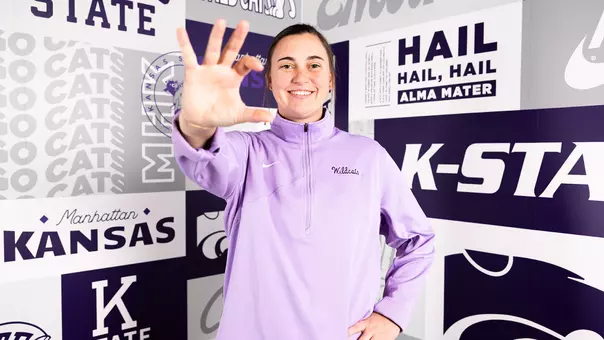
As a pre-law student, K-State women's soccer senior Krista Haddock is more interested in legislation than the average student-athlete.
"It's kind of my thing," Haddock laughed.
This made the news she received from the Big 12 Conference about a month ago extremely exciting.
Haddock was named as one of the conference's three student-athletes to represent the Big 12 in the autonomy governance structure within Division I intercollegiate athletics.
Being selected for the three-year term, Haddock said, was meaningful because of the quality of applicants she was up against and for the opportunity it represented. Not to mention the insight it will give her into a possible career choice.
"Between other members of Big 12 SAAC and even people here at K-State, I was up against really tough competition," Haddock, previously one of K-State SAAC's two Big 12 representatives, said. "I had been told prior by a couple of our Big 12 SAAC advisors that they wanted me to apply. They thought because I have such a heavy interest in law and because I'm already involved in Big 12 SAAC that I would be a good fit for it, but just knowing the competition I was up against, it made me a little (nervous). To find out that I did actually get it, I was really excited."
The Division I governance structure provides the autonomy conferences (Big 12, ACC, Big Ten, Pac-12, SEC) authority to adopt rules in a set of specific areas and ensures that student-athletes have the ability to vote in the decision-making process. Under this structure, each institution in the five conferences have one (1) vote (65 institutional votes) and the three (3) student-athlete representatives per conference also have one (1) vote (15 student-athlete votes), for a total of 80 votes.
In her new role, Haddock will be one of those votes.
"That's really exciting to me that I can actually be there and it can be my voice heard on behalf of the rest of the student-athletes here at K-State and the Big 12," she said. "I think it's really important because for a very long time student-athletes didn't have very much of a voice."
Haddock heard about the autonomy rep position at conference's annual SAAC meeting last year in Dallas, Texas. There, she roomed with TCU women's basketball's Amy Okonkwo, one of the autonomy reps.
"I heard a lot about it, and I think the Big 12 in general is really trying to kick start student-athlete involvement in our legislative process," Haddock said. "Basically, that kicked off a lot of my excitement. To hear that this group of three individuals got to go a little bit farther and be a little bit more involved in the voting, that was just really exciting to me."
Since this autonomy governance structure took place in 2015, many impactful legislative proposals have been passed to enhance the student-athlete experience. Some examples include cost-of-attendance reforms, concussion protocol changes and, most recently, transfer rule modifications.
Haddock complimented the overall shift in college athletics in recent years, especially within the Big 12, to give student-athletes a bigger voice in legislation that directly affects them. However, she said in order for student-athletes to truly be heard, they must first speak up.
"It's our responsibility because I do believe a lot of our administrators want to do what's best for us and sometimes they just don't know what that is, not because they're not trying but because we're not telling them," Haddock said. "Here within K-State SAAC as well as Big 12 SAAC, that's kind of been one of my focuses and why I felt like I was a good choice to represent us in the autonomy governance, because that's something I really push for."
As a pre-law student, K-State women's soccer senior Krista Haddock is more interested in legislation than the average student-athlete.
"It's kind of my thing," Haddock laughed.
This made the news she received from the Big 12 Conference about a month ago extremely exciting.
Haddock was named as one of the conference's three student-athletes to represent the Big 12 in the autonomy governance structure within Division I intercollegiate athletics.
Being selected for the three-year term, Haddock said, was meaningful because of the quality of applicants she was up against and for the opportunity it represented. Not to mention the insight it will give her into a possible career choice.
"Between other members of Big 12 SAAC and even people here at K-State, I was up against really tough competition," Haddock, previously one of K-State SAAC's two Big 12 representatives, said. "I had been told prior by a couple of our Big 12 SAAC advisors that they wanted me to apply. They thought because I have such a heavy interest in law and because I'm already involved in Big 12 SAAC that I would be a good fit for it, but just knowing the competition I was up against, it made me a little (nervous). To find out that I did actually get it, I was really excited."
The Division I governance structure provides the autonomy conferences (Big 12, ACC, Big Ten, Pac-12, SEC) authority to adopt rules in a set of specific areas and ensures that student-athletes have the ability to vote in the decision-making process. Under this structure, each institution in the five conferences have one (1) vote (65 institutional votes) and the three (3) student-athlete representatives per conference also have one (1) vote (15 student-athlete votes), for a total of 80 votes.
In her new role, Haddock will be one of those votes.
"That's really exciting to me that I can actually be there and it can be my voice heard on behalf of the rest of the student-athletes here at K-State and the Big 12," she said. "I think it's really important because for a very long time student-athletes didn't have very much of a voice."
Haddock heard about the autonomy rep position at conference's annual SAAC meeting last year in Dallas, Texas. There, she roomed with TCU women's basketball's Amy Okonkwo, one of the autonomy reps.
"I heard a lot about it, and I think the Big 12 in general is really trying to kick start student-athlete involvement in our legislative process," Haddock said. "Basically, that kicked off a lot of my excitement. To hear that this group of three individuals got to go a little bit farther and be a little bit more involved in the voting, that was just really exciting to me."
Since this autonomy governance structure took place in 2015, many impactful legislative proposals have been passed to enhance the student-athlete experience. Some examples include cost-of-attendance reforms, concussion protocol changes and, most recently, transfer rule modifications.
Haddock complimented the overall shift in college athletics in recent years, especially within the Big 12, to give student-athletes a bigger voice in legislation that directly affects them. However, she said in order for student-athletes to truly be heard, they must first speak up.
"It's our responsibility because I do believe a lot of our administrators want to do what's best for us and sometimes they just don't know what that is, not because they're not trying but because we're not telling them," Haddock said. "Here within K-State SAAC as well as Big 12 SAAC, that's kind of been one of my focuses and why I felt like I was a good choice to represent us in the autonomy governance, because that's something I really push for."



Players Mentioned

F
/ SoccerK-State Soccer | End of Season Recap
Thursday, November 20
K-State Soccer | Reece Walrod Every Minute Played
Tuesday, November 11
K-State Soccer | You Make The Face, I Make The Sound
Tuesday, November 11
K-State Soccer | Postgame Highlights vs Iowa State
Friday, October 31