Our Story - Abigail Archibong
8/3/2020
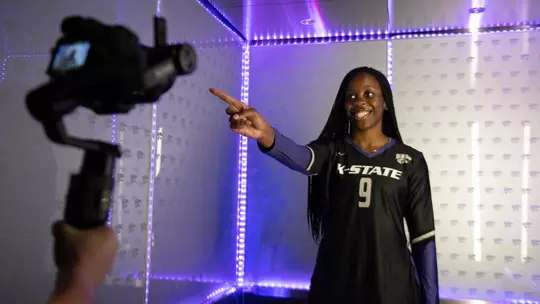
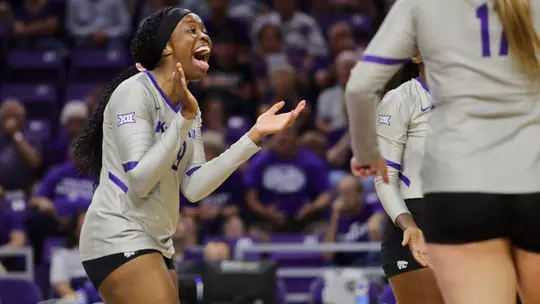
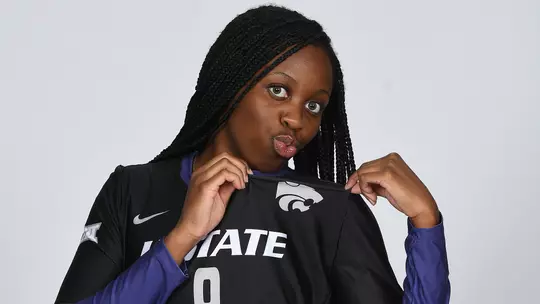
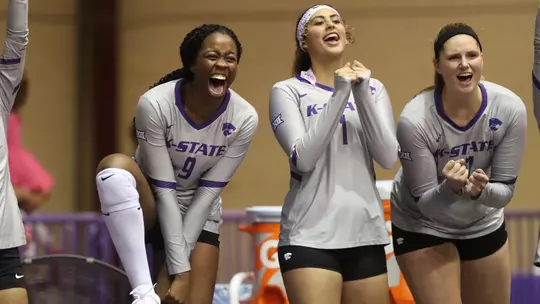
Abigail Archibong is a redshirt sophomore on K-State Volleyball and the Diversity, Equity and Inclusion Executive Officer on SAAC [Student-Athlete Advisory Committee]. Appointed in July, she will be the first member of SAAC to hold this position.
We spoke to Abigail about what she hopes to accomplish in the role, her experience as a black student-athlete and Diversity and Inclusion resources at K-State.
What inspired you to join SAAC as Diversity, Equity and Inclusion Executive Officer?
AA: From a young age in school, I’ve always been interested in being a leader on my team. When the opportunity came up, I hadn’t done it previously because I was like, ‘I don’t have enough time,’ but a bunch of the girls on my team are on SAAC and Brynn Carlson in particular, I just thought it was amazing how she was able to juggle all of these leadership roles and still have a strong presence on the volleyball team. I just wanted to do more, be a leader and a voice for student-athletes and my teammates.
Something I’ve heard from a lot of people this summer is that we’re going to find out just how invested folks are in movements like Black Lives Matter once those aren’t trending on Twitter every day. Why is it important for SAAC to keep the focus on those issues at K-State?
AA: As student-athletes, and on this leadership committee, we have a voice to help enforce things in this community and the athletic department. Especially, since we have a connection with some of the higher-ups at K-State, we can actually enact real change. Even after Black Lives Matter isn’t trending anymore, we’re still going to continue to advocate for the movement and everything will show just how important it is, because black lives really do matter and our black student-athletes’ lives matter.
You have an importance outside of your sport, and you are greater than your sport.Abigail Archibong
Have there been any Diversity and Inclusion events that you attended at K-State in the past that really resonated with you?
AA: The biggest one for me was the Black Student-Athlete Summit. It was my first time attending a big conference like that, but I went with Julian [Jones] and some other student-athletes. We went down to Austin, Texas and it was a big summit on how people feel at PWIs (Predominantly White Institutions) and how people get through that experience. It was amazing to be around other black student-athletes and just hear their stories about how they started organizations on campus, businesses and it was really enlightening to be around them. Another thing they taught us was how to continue with life after sports, or athletic-identity foreclosure. Basically, you have an importance outside of your sport and you are greater than your sport.
"You can be someone outside of your sport."
— K-State Volleyball (@KStateVB) February 4, 2020
Abigail Archibong on her experience attending the #BlackStudentAthleteSummit in January.#KStateVB | #VolleyCats pic.twitter.com/XW1jLrjczZ
That seems like an important piece of SAAC too, as you help student-athletes prepare for life after college. Are there any resources they can take advantage of at K-State, or that you would like to make more accessible to student-athletes in the future?
AA: I’ve talked with Julian a lot and he’s done so much with preparing student-athletes for life after K-State. I’ve been in some personal finance meetings about how to manage your finances, save and everything. Even at our PALS (Positioning Athletes for Life-long Success) or the events that he runs with Kennedy [Felice], they do a good job preparing us for life outside of athletics.
A lot of athletic departments are investing more in mental health resources across the country, such as Anne Weese in her position at K-State. Given the events of the last few months, how important are those mental health resources for black student-athletes?
AA: It’s very important and it can be hard because black student-athletes are often coming from different backgrounds and different cultures. On the football team for example, they have black coaches, and I’m sure they are more inclined to open up to people who look like them. I think if we had more people of color and counselors of colors, it would allow for black people from different types of backgrounds and cultures to feel more comfortable opening up. It can be an issue and it’s OK to struggle with it, but it’s also OK to get help.
So, when you were going through the recruiting process for volleyball, do you feel like the schools you visited did a good job highlighting those resources?
AA: I think so – I remember when I came to K-State, a big thing for me was I came to a practice and Dr. Be Stoney came up and she looked like me. Going through the visit, white people were in the majority and I was like ‘OK, I’d be I’d be fine with this. I’m used to this’ and I don’t have to assimilate, but seeing Dr. Stoney there and having her be like ‘Are you OK with this? I know this school isn’t one to discriminate, everyone is very inclusive.’ Having her reassure me of that was a huge deal for me and made me feel even more comfortable at this university.
I want to be able to make sure everyone feels like they have a place they can call home at Kansas State University, where they feel like they are part of a family.Abigail Archibong
Looking ahead to your role on SAAC, obviously there are a ton of unknowns this year, but what are some of your top priorities going to be in your new position?
AA: I know we definitely want to bring all cultures together, not just black people. I want to be able to make sure everyone feels like they have a place they can call home at Kansas State University, where they feel like they are part of a family. I know it’s a big mantra that we push. But I want them to actually feel like a family.