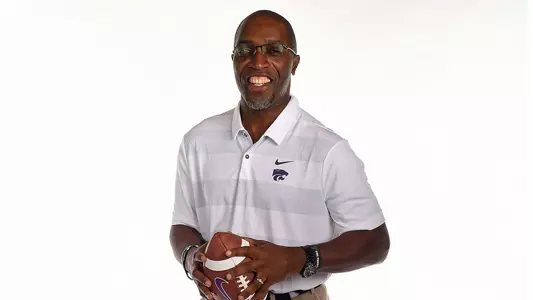
SE: Van Malone Looks to Bring ‘Be Elite,’ ‘Winners Win’ Mentalities to K-State Cornerbacks
Feb 04, 2019 | Football, Sports Extra
By Corbin McGuire
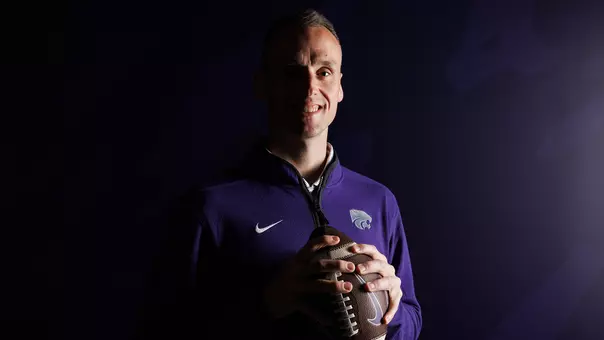
In the past, K-State defensive back coach Van Malone has written each of his players a note before every game. The messages varied. Their effects may have been minimal; they could have been the exact inspiration one player needed to raise his game.
Regardless, the point of these notes has not changed. They represent an example of the type of culture Malone has tried to create wherever he has been, one where going the extra mile becomes habitual.
Or, as Malone put it in much catchier verbiage: "Be elite in your 20-square feet."
"When I talk to my position group, the cornerbacks, we talk about being elite in our jobs, being elite as individuals. If we can get our group to be elite, then it goes far in being able to help the defense and then on to the special teams and then on to the offense," he said. "I just believe that it starts with each individual and with me, as a coach."
Thus, the pre-game notes. How could he ask his players to be elite if he was not doing so himself?
"You could probably win a game without doing that. They could probably perform well without doing that, but, for me, that's one more step, that's one more thing that maybe some other coach isn't doing," Malone said. "I'm going to take that extra step. I'm going to take an extra step in recruiting. I'm going to take an extra step as a father, as a husband, because I am, just like my players, always concerning myself with what I can do to be the best that I can be, to be elite."
For his players, Malone said this mentality can look a lot of different ways. It could be a player watching extra film, getting to practice a few minutes early to work on footwork or spending additional time with a coach to go over avenues to improve.
"Those are the small things that, as a coach, I share with players," Malone said. "You don't make progress hunks at a time. It's small, incremental processes, small incremental steps, and you stack them on top of each other to make the lasting effects."
A coach for the last 20 years, Malone also said he's been "guided" by another short message he picked up early in his career.
"Winners win," he said, "and losers lose."
It's a mantra built on confidence, positive thinking and self-reflection.
To start, Malone said he never wants to hear his players say, "We can't lose this game," or really to mention the word "lose" at all.
"We talk about winning. We talk about the positive aspects of our lives. We talk about the positive aspect of our team, where we're going," he said. "I always push that to my players, that winners win. No matter what the score, no matter what the outlook, they win."
The obvious follow-up to this: What about in a loss? Malone said this is where the mindset becomes about more than game results.
"How do they win in that case? They look at the things they did wrong and they try to grow from them. They try to see what things they did in a good way so they can expand on those things," he said. "One of the driving forces for me is, 'Winners win.' They find a way to win, no matter what the outcome or outlook is."
Like his philosophies, Malone's outlook on his role as a coach has also been shaped by his experiences in the game.
A defensive back at Texas (1990-93) who played four seasons with the Detroit Lions, Malone said his coaches inspired him to put on a headset when he finished playing. The list of coaches he considered mentors includes names like Gary Darnell, Bruce Bell, Bill Barron, Elton Conger, Bobby Jack Wright, Steve Bernstein, John Mackovic and David McWilliams.
"Those guys had lasting impacts on my life. They're the reason I coach.I'm a coach because of guys who poured into me and who took time to make sure I was doing the right things on and off the field," he said. "Of course, I understand the responsibility of a coach to be able to develop fundamentals, to be able to teach technique, to be able to teach guys to do the things on the field to be successful, but I also understand that off the field there's something else."
That something else?
"Helping the guys to make sure they graduate, helping guys to make sure they are developing into young men," Malone said, "because one day they'll be fathers, they'll be husbands, they'll be citizens out walking the Earth."
Malone began his coaching career began at the high school ranks in Texas in 1999. He moved up to the college level in 2003, somewhat ironically with North Dakota State. About 15 years later, it was the subject of his first conversation with Chris Klieman, then NDSU's head coach, at the 2018 AFCA Convention. Malone said he left that brief encounter with a strong impression that his philosophies aligned with Klieman's.
Nearly a year later, Klieman became K-State's head coach and hired Malone to his staff.
"I think he's going to bring those same ideas, those same culture aspects to this program," said Malone, "and we'll have great success because of it."
In terms of experience, Malone's should be valuable toward building that success.
Counting his year at North Dakota State, Malone has coached in six different conferences, including two separate stops in the Big 12. He has led a variety of positions, from wide receivers to corners to safeties, as well as some special teams units. Most recently, he served as SMU's defensive coordinator for three seasons (2015-17) and spent last season as a defensive analyst for Mississippi State.
The journey has taught Malone more than he can remember. What he does, he said he wants to pass on to his players, whether it's with a pre-game note or a "winners win" message.
"I'm in a place now where I understand, as a coach, the great responsibility to be able to develop young men," Malone, who's also coached at Western Michigan, North Texas, Texas A&M, Tulsa and Oklahoma State. "I'm excited about the future here at Kansas State and the opportunity to do that."
In the past, K-State defensive back coach Van Malone has written each of his players a note before every game. The messages varied. Their effects may have been minimal; they could have been the exact inspiration one player needed to raise his game.
Regardless, the point of these notes has not changed. They represent an example of the type of culture Malone has tried to create wherever he has been, one where going the extra mile becomes habitual.
Or, as Malone put it in much catchier verbiage: "Be elite in your 20-square feet."
"When I talk to my position group, the cornerbacks, we talk about being elite in our jobs, being elite as individuals. If we can get our group to be elite, then it goes far in being able to help the defense and then on to the special teams and then on to the offense," he said. "I just believe that it starts with each individual and with me, as a coach."
Thus, the pre-game notes. How could he ask his players to be elite if he was not doing so himself?
"You could probably win a game without doing that. They could probably perform well without doing that, but, for me, that's one more step, that's one more thing that maybe some other coach isn't doing," Malone said. "I'm going to take that extra step. I'm going to take an extra step in recruiting. I'm going to take an extra step as a father, as a husband, because I am, just like my players, always concerning myself with what I can do to be the best that I can be, to be elite."
For his players, Malone said this mentality can look a lot of different ways. It could be a player watching extra film, getting to practice a few minutes early to work on footwork or spending additional time with a coach to go over avenues to improve.
"Those are the small things that, as a coach, I share with players," Malone said. "You don't make progress hunks at a time. It's small, incremental processes, small incremental steps, and you stack them on top of each other to make the lasting effects."
A coach for the last 20 years, Malone also said he's been "guided" by another short message he picked up early in his career.
"Winners win," he said, "and losers lose."
It's a mantra built on confidence, positive thinking and self-reflection.
To start, Malone said he never wants to hear his players say, "We can't lose this game," or really to mention the word "lose" at all.
"We talk about winning. We talk about the positive aspects of our lives. We talk about the positive aspect of our team, where we're going," he said. "I always push that to my players, that winners win. No matter what the score, no matter what the outlook, they win."
The obvious follow-up to this: What about in a loss? Malone said this is where the mindset becomes about more than game results.
"How do they win in that case? They look at the things they did wrong and they try to grow from them. They try to see what things they did in a good way so they can expand on those things," he said. "One of the driving forces for me is, 'Winners win.' They find a way to win, no matter what the outcome or outlook is."
Like his philosophies, Malone's outlook on his role as a coach has also been shaped by his experiences in the game.
A defensive back at Texas (1990-93) who played four seasons with the Detroit Lions, Malone said his coaches inspired him to put on a headset when he finished playing. The list of coaches he considered mentors includes names like Gary Darnell, Bruce Bell, Bill Barron, Elton Conger, Bobby Jack Wright, Steve Bernstein, John Mackovic and David McWilliams.
"Those guys had lasting impacts on my life. They're the reason I coach.I'm a coach because of guys who poured into me and who took time to make sure I was doing the right things on and off the field," he said. "Of course, I understand the responsibility of a coach to be able to develop fundamentals, to be able to teach technique, to be able to teach guys to do the things on the field to be successful, but I also understand that off the field there's something else."
That something else?
"Helping the guys to make sure they graduate, helping guys to make sure they are developing into young men," Malone said, "because one day they'll be fathers, they'll be husbands, they'll be citizens out walking the Earth."
Malone began his coaching career began at the high school ranks in Texas in 1999. He moved up to the college level in 2003, somewhat ironically with North Dakota State. About 15 years later, it was the subject of his first conversation with Chris Klieman, then NDSU's head coach, at the 2018 AFCA Convention. Malone said he left that brief encounter with a strong impression that his philosophies aligned with Klieman's.
Nearly a year later, Klieman became K-State's head coach and hired Malone to his staff.
"I think he's going to bring those same ideas, those same culture aspects to this program," said Malone, "and we'll have great success because of it."
In terms of experience, Malone's should be valuable toward building that success.
Counting his year at North Dakota State, Malone has coached in six different conferences, including two separate stops in the Big 12. He has led a variety of positions, from wide receivers to corners to safeties, as well as some special teams units. Most recently, he served as SMU's defensive coordinator for three seasons (2015-17) and spent last season as a defensive analyst for Mississippi State.
The journey has taught Malone more than he can remember. What he does, he said he wants to pass on to his players, whether it's with a pre-game note or a "winners win" message.
"I'm in a place now where I understand, as a coach, the great responsibility to be able to develop young men," Malone, who's also coached at Western Michigan, North Texas, Texas A&M, Tulsa and Oklahoma State. "I'm excited about the future here at Kansas State and the opportunity to do that."
K-State FB | Welcome back Collin Klein
Monday, December 08
K-State FB | Head Coach Collin Klein Radio Interview
Friday, December 05
K-State FB | Head Coach Collin Klein Official Introductory Event
Friday, December 05
K-State FB | Thank You Coach Klieman
Wednesday, December 03