SE: A Letter to Rowing Leads to Unforgettable Experience for K-State Academic Advisor Kim Gross
Jul 22, 2019 | Rowing, Sports Extra, Evans Student-Athlete Success Program
By Corbin McGuire
Every student-athlete has a story that can help somebody else, even if they don't believe it or don't recognize it until years after they are done competing.
Kim Gross, academic advisor for K-State football and rowing, passionately believes that sentence. In a sense, Gross is that sentence. As a rower for Sacramento State (2012-15), Gross heard a similar sentence, one she now tells the Wildcats she works with and mentors.
"What you're doing now is going to translate to anything you do."
These words did not fully resonate with her as a student-athlete, and she does not expect them to do so with every Wildcat she tells. However, Gross does have a story to back that claim. Her story. She shared it with the world — nervously, she still adds — without a clue how far it would go and where it would take her.
She published her story on LinkedIn, entitled "Dear Rowing, Thank You," on February 9. She thought, "If 100 people read it, that would be enough."
Five months later, her story of how rowing prepared her for life has reached nearly 53,000 views. K-State quarterback Skylar Thompson, while in her office one day, put the story's analytics into a fitting context.
"He goes, 'Basically Bill Snyder Family Stadium read your article,'" Gross said. "When he said that, that put a visual to what it was."
Soon after it published, Gross heard from K-State rowers who said, "You put into words what we're experiencing." That, Gross said, was the "best compliment" she could have ever hoped for when she started writing it. Even a couple of her football players saw it on Twitter, read it and applauded her for it, "which was awesome, too," Gross said.
Random rowing parents messaged her and told her they could see what she wrote coming to fruition in their children. Clubs across the country even asked if they could use it for high school freshmen starting out.
"It was kind of unbelievable," she said.
What happened next was even harder to believe.
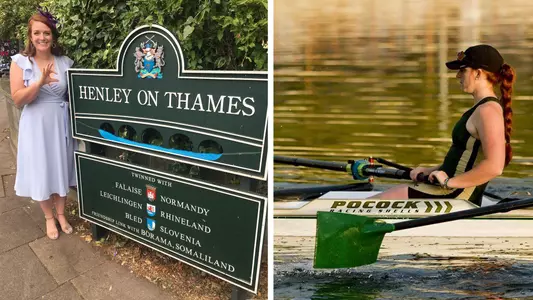
Gross' story led to her being invited to England to attend the Henley Royal Regatta, a historic and premiere event in international rowing that takes place every July about an hour west of London.
The event took on even more importance this year. That's because it included the return of the King's Cup competition for the first time since the 1919 Royal Henley Peace Regatta, which followed World War I.
In its return, military crews from the six original Allied nations (United States, U.K., Canada, France, Australia and New Zealand), along with Germany and Netherlands, raced in a bracket-style competition. For the first time, men and women raced together.
Sitting in her office in the Vanier Family Football Complex a week later, Gross described a few moments from the trip that stood out.
One, she said, was watching the United States team of Navy crew members beat Germany in dramatic fashion in the final. Another had less to do with what was going on out on the water and more to do with everything that got her there.
"I just had a moment of reflection sitting right next to the river," she said, "of how me pressing post on this article, that I had thought about for a while, had got me here."
A few years before that decision, the San Diego, California native moved two time zones east to serve as a graduate assistant for K-State Athletics. In the spring of 2017, she graduated with a master's degree in college student development with an emphasis on collegiate athletics. She received a full-time position as one of the football team's academic counselors soon after.
Last fall, she added rowing to her academic advising responsibilities. Being around K-State's rowers, she said, got the wheels turning to write her story. From there, an outline became a first draft, which she revisited from time to time to tweak. The final push to finish and post it came after the rowing team invited her to its two-kilometer ("2K") testing day.
"Being part of that and feeling their energy, it brought me back to what I did as a student-athlete," she said. "I remember leaving from that on Saturday morning and going to a football recruiting breakfast, and then I went home I finished it. I was, like, 'I'm hitting post today.'"
She added: "I was pretty nervous."
Those nerves turned into unexpected elation from how well her story was received.
Once it got to across the pond to Chris Hartley, Chairman of the King's Cup Organizing Committee, he reached out to Gross to pass along his admiration. Hartley told her he wanted to use it somehow in the centennial celebration. Eventually, he came up with the idea of mailing it to the participating countries' crews, which she did.
To her surprise, she received two letters back: One from the United States' Joseph Dunford, the chairman of the Joint Chiefs of Staff, and another from Angus Campbell, Australia's defense force chief.
"To get two letters back was kind of surreal," she said.
Plus, Gross received free passes to attend the Henley Royal Regatta. Along with her mother, she took her boyfriend and K-State men's basketball director of video services, Mike Furlong, whom she said played a "huge supporting" role in publishing her story.
Gross also named K-State Director of Mental Wellness/Sport Psychology Anne Weese as an integral person in getting her to England. Weese set up a GoFundMe page for Gross that raised more than $1,400 to help offset a decent-sized portion of the travel costs.
"I will be forever grateful for everyone that helped out, and there were a lot of people in the (athletic) department that chipped in," she said. "I am extremely grateful for all of the support."
Without it, Gross might have missed out on an opportunity of a lifetime.
One specific reason: Her passes were to the Stewards' Enclosure. Or, "The fancy area," as Gross put it. The dress code was strict; dresses had to fall below the knees. Cell phone use was strictly prohibited; if you got caught twice, your pass was removed. There were even specific areas just for tea.
"I'll probably never experience that again," she said. "It was really, really cool."
What will make this entire experience even better, Gross followed, is if she can help student-athletes start to realize what she's figured out in the last year. Namely, what they are doing is important, and their stories have power.
"I hope student-athletes don't underestimate the things that they're experiencing right now and the power that they're going to have when they get older," she said. "Every student-athlete has a story that could help someone somewhere, and maybe it's not going to happen for another couple years, but I hope student-athletes know that they are special, what they're doing is special and it could influence or help someone."
Every student-athlete has a story that can help somebody else, even if they don't believe it or don't recognize it until years after they are done competing.
Kim Gross, academic advisor for K-State football and rowing, passionately believes that sentence. In a sense, Gross is that sentence. As a rower for Sacramento State (2012-15), Gross heard a similar sentence, one she now tells the Wildcats she works with and mentors.
"What you're doing now is going to translate to anything you do."
These words did not fully resonate with her as a student-athlete, and she does not expect them to do so with every Wildcat she tells. However, Gross does have a story to back that claim. Her story. She shared it with the world — nervously, she still adds — without a clue how far it would go and where it would take her.
She published her story on LinkedIn, entitled "Dear Rowing, Thank You," on February 9. She thought, "If 100 people read it, that would be enough."
Five months later, her story of how rowing prepared her for life has reached nearly 53,000 views. K-State quarterback Skylar Thompson, while in her office one day, put the story's analytics into a fitting context.
"He goes, 'Basically Bill Snyder Family Stadium read your article,'" Gross said. "When he said that, that put a visual to what it was."
Soon after it published, Gross heard from K-State rowers who said, "You put into words what we're experiencing." That, Gross said, was the "best compliment" she could have ever hoped for when she started writing it. Even a couple of her football players saw it on Twitter, read it and applauded her for it, "which was awesome, too," Gross said.
Random rowing parents messaged her and told her they could see what she wrote coming to fruition in their children. Clubs across the country even asked if they could use it for high school freshmen starting out.
"It was kind of unbelievable," she said.
What happened next was even harder to believe.
Gross' story led to her being invited to England to attend the Henley Royal Regatta, a historic and premiere event in international rowing that takes place every July about an hour west of London.
The event took on even more importance this year. That's because it included the return of the King's Cup competition for the first time since the 1919 Royal Henley Peace Regatta, which followed World War I.
In its return, military crews from the six original Allied nations (United States, U.K., Canada, France, Australia and New Zealand), along with Germany and Netherlands, raced in a bracket-style competition. For the first time, men and women raced together.
Sitting in her office in the Vanier Family Football Complex a week later, Gross described a few moments from the trip that stood out.
One, she said, was watching the United States team of Navy crew members beat Germany in dramatic fashion in the final. Another had less to do with what was going on out on the water and more to do with everything that got her there.
"I just had a moment of reflection sitting right next to the river," she said, "of how me pressing post on this article, that I had thought about for a while, had got me here."
A few years before that decision, the San Diego, California native moved two time zones east to serve as a graduate assistant for K-State Athletics. In the spring of 2017, she graduated with a master's degree in college student development with an emphasis on collegiate athletics. She received a full-time position as one of the football team's academic counselors soon after.
Last fall, she added rowing to her academic advising responsibilities. Being around K-State's rowers, she said, got the wheels turning to write her story. From there, an outline became a first draft, which she revisited from time to time to tweak. The final push to finish and post it came after the rowing team invited her to its two-kilometer ("2K") testing day.
"Being part of that and feeling their energy, it brought me back to what I did as a student-athlete," she said. "I remember leaving from that on Saturday morning and going to a football recruiting breakfast, and then I went home I finished it. I was, like, 'I'm hitting post today.'"
She added: "I was pretty nervous."
Those nerves turned into unexpected elation from how well her story was received.
Once it got to across the pond to Chris Hartley, Chairman of the King's Cup Organizing Committee, he reached out to Gross to pass along his admiration. Hartley told her he wanted to use it somehow in the centennial celebration. Eventually, he came up with the idea of mailing it to the participating countries' crews, which she did.
To her surprise, she received two letters back: One from the United States' Joseph Dunford, the chairman of the Joint Chiefs of Staff, and another from Angus Campbell, Australia's defense force chief.
"To get two letters back was kind of surreal," she said.
Plus, Gross received free passes to attend the Henley Royal Regatta. Along with her mother, she took her boyfriend and K-State men's basketball director of video services, Mike Furlong, whom she said played a "huge supporting" role in publishing her story.
Gross also named K-State Director of Mental Wellness/Sport Psychology Anne Weese as an integral person in getting her to England. Weese set up a GoFundMe page for Gross that raised more than $1,400 to help offset a decent-sized portion of the travel costs.
"I will be forever grateful for everyone that helped out, and there were a lot of people in the (athletic) department that chipped in," she said. "I am extremely grateful for all of the support."
Without it, Gross might have missed out on an opportunity of a lifetime.
One specific reason: Her passes were to the Stewards' Enclosure. Or, "The fancy area," as Gross put it. The dress code was strict; dresses had to fall below the knees. Cell phone use was strictly prohibited; if you got caught twice, your pass was removed. There were even specific areas just for tea.
"I'll probably never experience that again," she said. "It was really, really cool."
What will make this entire experience even better, Gross followed, is if she can help student-athletes start to realize what she's figured out in the last year. Namely, what they are doing is important, and their stories have power.
"I hope student-athletes don't underestimate the things that they're experiencing right now and the power that they're going to have when they get older," she said. "Every student-athlete has a story that could help someone somewhere, and maybe it's not going to happen for another couple years, but I hope student-athletes know that they are special, what they're doing is special and it could influence or help someone."

K-State Rowing | Dec. 4 Pre-Season Hype
Thursday, December 04
K-State Rowing | Happy Thanksgiving
Friday, November 28
K-State Rowing | Practice and Preparation
Tuesday, November 11
K-State Rowing | Head of the Kansas Race Recap
Tuesday, November 11