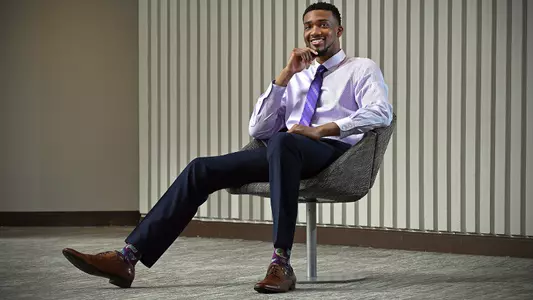
Q&A with Assistant Coach Shane Southwell
Mar 31, 2020 | Men's Basketball
Q: When did you know you wanted to coach?
"I have always had the thought of coaching once my playing career was over. That was probably back in high school when I first started to think about that. I knew it was something I wanted to get involved in. It was either going to be some form of commentating or coaching (my future plans). And coaching kind of just came a part of my situation. I turned 25 (and finished my playing career) and Coach (Bruce) Weber called me and asked me to be a grad assistant at K-State."
Q: How would describe your coaching style?
"That's a hard question right now at this stage in my career, but right now, I think it's to be a guy who can be a bridge to student-athletes and be relatable. At 28, I am able to connect to student-athletes really well. Also, the player development side of things is really, really key and something that I bring to the table that is important to student-athletes. Just to help them get better every day."
Q: How would you describe your experience as a student-athlete at K-State?
"Just a great experience. I grew a lot in that time period as a student-athlete. Obviously, coming from Harlem, New York, the start of my career was a bit of a culture shock for me, but then it became home. I grew a lot as a basketball player and just got better and better as a basketball player. But most importantly, I just grew as a human, as a person, so much in that time period. I was able to experience a really, special culture and lifestyle and meet people and develop friendships with teammates that will last a lifetime."
Q: What's your biggest memory as a player?
"Definitely, winning a Big 12 Championship (as a junior) when we hadn't won a conference championship since 1977 is a big memory for me. It was a big, big accomplishment especially with the coaching change and guys having to lean on one another to be a part of history."
Q: What was your biggest lesson learned as a player?
"Honestly, when you go through a coaching change (as a student-athlete), it's pretty life changing. It's a lot easier now for student-athletes especially with the transfer portal and the numbers that are transferring now. But for me, the transition from (head coach) Frank Martin to (head coach) Bruce Weber, I was able to look in the mirror and say 'two different coaches and you can be the common denominator (to continue this success).' For me personally, it was an opportunity for me to look in the mirror and really mature as a student-athlete."
Q: What kind of advantage is it for you to having played at K-State and now recruiting players to K-State?
"It's a huge advantage. It's one thing to sell a program, but another to sell a program that you personally have grown and developed in yourself. For me, it's really, really important and a special, special situation because who can best tell the story of a program than someone has been through it."
Q: How would you describe your first year as a full-time assistant at Robert Morris?
"It was a big-time learning experience. I was able to be a sponge to an already great coach in (head coach) Andy Toole. I was able to learn so much from him, not only from an X's and O's standpoint, but in the recruiting world. How it is to be the CEO (of a program) and to be a brand. He does a great job of building his program and that's something that I will definitely incorporate in my coaching style for when I get the opportunity to run my own program."
Q: Success has seemed to follow you. You won a state title in high school, won a Big 12 title and advanced to four NCAA Tournaments as a player at K-State, won 25 games in back-to-back seasons as a graduate assistant then just won 20 games and won a conference title in your first-year as a full-time assistant. What's the secret?
"Honestly, it's about being around the right people, cherishing those relationships and knowing how to build everyone around you. I think I have always done a good job of being relatable to everyone around me to my teammates to my coaches and now as a coach. I think it's very important to have a relationship with everyone around the program. I think it's something that I have been able to master and has been really, really beneficial to me as a player and now as a coach."
"I have always had the thought of coaching once my playing career was over. That was probably back in high school when I first started to think about that. I knew it was something I wanted to get involved in. It was either going to be some form of commentating or coaching (my future plans). And coaching kind of just came a part of my situation. I turned 25 (and finished my playing career) and Coach (Bruce) Weber called me and asked me to be a grad assistant at K-State."
Q: How would describe your coaching style?
"That's a hard question right now at this stage in my career, but right now, I think it's to be a guy who can be a bridge to student-athletes and be relatable. At 28, I am able to connect to student-athletes really well. Also, the player development side of things is really, really key and something that I bring to the table that is important to student-athletes. Just to help them get better every day."
Q: How would you describe your experience as a student-athlete at K-State?
"Just a great experience. I grew a lot in that time period as a student-athlete. Obviously, coming from Harlem, New York, the start of my career was a bit of a culture shock for me, but then it became home. I grew a lot as a basketball player and just got better and better as a basketball player. But most importantly, I just grew as a human, as a person, so much in that time period. I was able to experience a really, special culture and lifestyle and meet people and develop friendships with teammates that will last a lifetime."
Q: What's your biggest memory as a player?
"Definitely, winning a Big 12 Championship (as a junior) when we hadn't won a conference championship since 1977 is a big memory for me. It was a big, big accomplishment especially with the coaching change and guys having to lean on one another to be a part of history."
Q: What was your biggest lesson learned as a player?
"Honestly, when you go through a coaching change (as a student-athlete), it's pretty life changing. It's a lot easier now for student-athletes especially with the transfer portal and the numbers that are transferring now. But for me, the transition from (head coach) Frank Martin to (head coach) Bruce Weber, I was able to look in the mirror and say 'two different coaches and you can be the common denominator (to continue this success).' For me personally, it was an opportunity for me to look in the mirror and really mature as a student-athlete."
Q: What kind of advantage is it for you to having played at K-State and now recruiting players to K-State?
"It's a huge advantage. It's one thing to sell a program, but another to sell a program that you personally have grown and developed in yourself. For me, it's really, really important and a special, special situation because who can best tell the story of a program than someone has been through it."
Q: How would you describe your first year as a full-time assistant at Robert Morris?
"It was a big-time learning experience. I was able to be a sponge to an already great coach in (head coach) Andy Toole. I was able to learn so much from him, not only from an X's and O's standpoint, but in the recruiting world. How it is to be the CEO (of a program) and to be a brand. He does a great job of building his program and that's something that I will definitely incorporate in my coaching style for when I get the opportunity to run my own program."
Q: Success has seemed to follow you. You won a state title in high school, won a Big 12 title and advanced to four NCAA Tournaments as a player at K-State, won 25 games in back-to-back seasons as a graduate assistant then just won 20 games and won a conference title in your first-year as a full-time assistant. What's the secret?
"Honestly, it's about being around the right people, cherishing those relationships and knowing how to build everyone around you. I think I have always done a good job of being relatable to everyone around me to my teammates to my coaches and now as a coach. I think it's very important to have a relationship with everyone around the program. I think it's something that I have been able to master and has been really, really beneficial to me as a player and now as a coach."
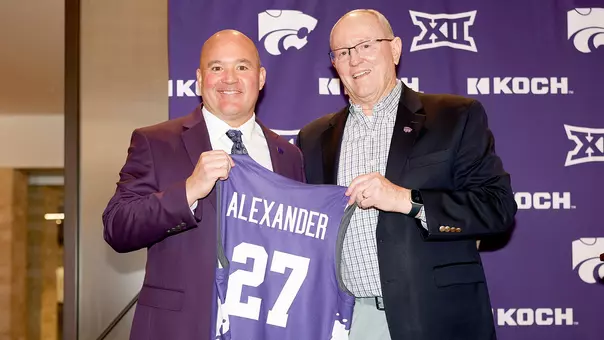
K-State Men's Basketball | New Staff Arrivals
Thursday, March 26
K-State Men's Basketball | Head Coach Casey Alexander Baseball Game TV Interview
Saturday, March 21
K-State Men's Basketball | Head Coach Casey Alexander Baseball Game Radio Interview
Saturday, March 21
K-State Men's Basketball | Coach Alexander First Look
Tuesday, March 17