SE: You Can Talk to Me – How Kim Gross, Lisa Rubin and Anne Weese Are Shining a Light on Student-Athlete Suicide Prevention
Apr 29, 2020 | Sports Extra
By: Austin Siegel
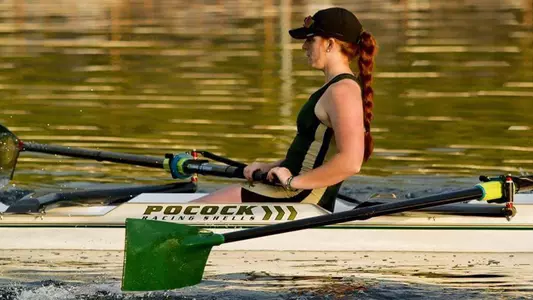
Just because most students at Sacramento State never made it to a rowing meet and couldn't tell you the difference between sitting stroke in the Varsity 8 or rowing in the Novice 4, Kim Gross could still feel the pressure.
There was no stadium nestled in the foothills of the Sierra Nevada, not many fans, usually just Gross and her teammates gliding across the colder-than-it-looks water of Lake Natoma.
"There will never be anyone else in my life who can put as much pressure on myself as I did when I was a rowing student-athlete," Gross said.
Every race that Gross rowed at Sacramento State lasted a few minutes. There were no points, assists, no offense and no defense. No way to compensate for a weakness with a strength.
She got in a boat, decided it was time to be miserable, and then exhausted her body's supply of anaerobic energy until so much lactate began to build up in her blood stream that an excess of hydrogen ions caused the pH in her muscles to drop.
In other words, Gross rowed until her body started to burn and then kept rowing. And she loved it.

"It's an intensity that knows how to work when no one is watching." she wrote in her 2019 story Dear Rowing, Thank You. "That the quiet voice in the back of my head – whether it's saying start the sprint now or urging me to take on something more at work – is always right. You taught me that when my inner voice tells me it's my time, that I better make my move."
Gross published those words as an Academic Advisor at K-State Athletics and sent a small ripple throughout the international rowing community. Parents messaged her about how the story inspired their kids and rowing clubs across the country shared her message with their team.
In July, Gross was invited to attend the Henley Royal Regatta in England, where she watched military crews from around the world race in one of rowing's most prestigious competitions.
And when Gross got back, and K-State Assistant Professor of Student Services Dr. Lisa Rubin talked to her about writing a very different story, her inner voice told Gross it was time to try.
---
"Thinking of suicide? You can talk to me."
The first line grabs your attention, because Gross, Rubin and K-State Director of Mental Wellness/Sport Psychology Dr. Anne Weese are very talented writers.
But the first seven words of College Athletes and Suicide Prevention: A Collaborative Autoethnography are also why Gross sat down to write in the first place.
"We don't really have words to describe what it feels like to go through depression and suicidal ideation," Gross said. "Especially for a student-athlete, when you're wired to be strong 100% of the time, then you don't have the language to put what you're going through into words."
In the article, Gross wrote about supporting a teammate who was contemplating suicide, but the story was also a chance to share her own struggles with mental health for the first time.
The beginning of the article references a sticker Gross had on her water bottle as a student-athlete at Sacramento State, after completing suicide awareness training for an on-campus job.
The article was published in The Journal of Issues in Intercollegiate Athletics in February, but Gross, Rubin and Weese adapted it for a story on AthleticDirectorU.com earlier this month.
"We put it together and worked on a shared Google Doc, because Kim was in California and Anne is a very busy person when she's working with every athlete that needs her support," Rubin said. "We thought this was extremely timely."
In Student-Athletes and Suicide Prevention, Gross writes about the challenging experience of coming home after her freshman year at Sacramento State. As she adapted to life away from campus, Gross said she struggled to deal with negative thoughts that often felt overwhelming.
Gross recalls driving to parking lots and sitting alone for hours because she didn't want her parents to ask why she was at home, thoughts of ending her life and wanting to ask for help.
"It's always been this pit in my heart that I had gone through that and never had the strength to share it," she said. "Especially when I was watching people that I was close with go through it, I still didn't have the courage to say, 'I get it, and this is why.' I think it was therapeutic for me to go through the experience of putting it on paper. It's also been very scary."
Writing Student-Athletes and Suicide Prevention has been a way for Gross, Rubin and Weese to help start that dialogue, but it also represents a new way of thinking about how athletic departments can better support student-athletes during these challenging times.
When Weese joined the K-State Athletic Department in 2019, she made a clear distinction between sports psychology, which focuses on counseling to help student-athletes improve their performance, and mental health care, which focuses on their needs at a more personal level.

Rubin explained that many athletic departments around the country have viewed the decision to focus on sports psychology and mental health as an either/or proposition.
"Anne explained the difference between the two roles to my class," Rubin said. "I think they're both important, but I have to err on the side of mental health counseling if athletic departments are only going to invest in one of those roles."
In her position, Weese has helped the K-State Athletic Department support mental health care for student-athletes.
"You cannot have high-performing athletes without a minimum baseline level of mental health and emotional well-being," Weese said. "A performance consultant and a performance coach can take you from a 9 to a 10. But if an athlete is down here at 2 or 3 and really struggling to go through their daily responsibilities, 8, 9 and 10 is so far off their radar."
It's an argument for ending the "invisibility of mental illness in athletes" that is so central to the story Gross tells in Student-Athletes and Suicide Prevention.
Rubin hoped that Gross would share her story after she presented at a regional conference for the National Association of Academic Advisors for Athletics and spoke to her class at K-State.
"It opened up a lot of space for comfort for some of the students in my class," Rubin said. "They had gone through some of these things but never told anyone about it."
"Dr. Rubin was my master's advisor and is one of the smartest people I know in this field," Gross said. "We had the pieces of this puzzle and it was just about putting it all together."
As a rowing student-athlete at Sacramento State, Gross writes about the nerves she felt putting the "Thinking of suicide? You can talk to me" sticker on her water bottle. When a teammate pulled her aside later that year, she asked if Gross could go with her to the counseling center after she had made a plan to kill herself the night before.
"What hurts me the most about the earlier story is that for the entire year, I listened to a number of teammates feel comfortable enough to tell me they were struggling with their mental health," Gross wrote. "And I said nothing. I was hiding a huge part of my story that made me so passionate about mental health. I listened and helped other student-athletes feel like someone saw them, but I never let my own weakness show enough to say I struggled too."

Gross, Rubin and Weese know that 2020 could take a toll on the mental health of student-athletes across the country. When COVID-19 brought the spring sports season to a halt and remote semesters became the norm across the country, the experiences that can help anchor student-athletes – games, practices, being part of a team – were ripped away.
"This change has been abrupt. If you think about the rigor of a student-athlete's schedule, the change from that to what's happening now is so extreme and so intense," Weese said. "We're talking about athletes who are missing their morning workout, film review, team meeting, position meeting, morning tutor, all of these things have been adjusted."
For Gross, those challenges have been part of her new role as an Academic Advisor at USC.
Working with the quarterbacks and wide receivers on the Trojans football team, in addition to working with the swimming and diving team, Gross is putting the stories behind Student-Athletes and Suicide Prevention into practice.
"It's opened my eyes to even more experiences and pressures that student-athletes go through that I didn't feel," she said. "I was a freaking rowing student-athlete…there was no one around, social media was not a thing, so I know that if I created that pressure, then I can relate to the pressure that a quarterback at USC is putting on himself."
None of those lessons is bigger than the simple fact that you don't need a professional background in mental health to be a resource for someone who is struggling.
"It was a huge factor in why I wanted to share," Gross said. "It's so much easier to say, 'Me too' than to have to formulate those words and ideas on your own."
If you or someone you know needs help, please contact the National Suicide Prevention hotline at 1-800-273-8255, anytime. You can reach Kansas State Counseling Services at any time by calling (785) 532-6927.
The non-profit foundation Hilinski's Hope is also releasing a podcast called "Unit3d" twice a week during the COVID-19 pandemic, featuring conversations from sport psychologists and mental health professionals to support student-athletes.
Just because most students at Sacramento State never made it to a rowing meet and couldn't tell you the difference between sitting stroke in the Varsity 8 or rowing in the Novice 4, Kim Gross could still feel the pressure.
There was no stadium nestled in the foothills of the Sierra Nevada, not many fans, usually just Gross and her teammates gliding across the colder-than-it-looks water of Lake Natoma.
"There will never be anyone else in my life who can put as much pressure on myself as I did when I was a rowing student-athlete," Gross said.
Every race that Gross rowed at Sacramento State lasted a few minutes. There were no points, assists, no offense and no defense. No way to compensate for a weakness with a strength.
She got in a boat, decided it was time to be miserable, and then exhausted her body's supply of anaerobic energy until so much lactate began to build up in her blood stream that an excess of hydrogen ions caused the pH in her muscles to drop.
In other words, Gross rowed until her body started to burn and then kept rowing. And she loved it.
"It's an intensity that knows how to work when no one is watching." she wrote in her 2019 story Dear Rowing, Thank You. "That the quiet voice in the back of my head – whether it's saying start the sprint now or urging me to take on something more at work – is always right. You taught me that when my inner voice tells me it's my time, that I better make my move."
Gross published those words as an Academic Advisor at K-State Athletics and sent a small ripple throughout the international rowing community. Parents messaged her about how the story inspired their kids and rowing clubs across the country shared her message with their team.
In July, Gross was invited to attend the Henley Royal Regatta in England, where she watched military crews from around the world race in one of rowing's most prestigious competitions.
And when Gross got back, and K-State Assistant Professor of Student Services Dr. Lisa Rubin talked to her about writing a very different story, her inner voice told Gross it was time to try.
---
"Thinking of suicide? You can talk to me."
The first line grabs your attention, because Gross, Rubin and K-State Director of Mental Wellness/Sport Psychology Dr. Anne Weese are very talented writers.
But the first seven words of College Athletes and Suicide Prevention: A Collaborative Autoethnography are also why Gross sat down to write in the first place.
"We don't really have words to describe what it feels like to go through depression and suicidal ideation," Gross said. "Especially for a student-athlete, when you're wired to be strong 100% of the time, then you don't have the language to put what you're going through into words."
In the article, Gross wrote about supporting a teammate who was contemplating suicide, but the story was also a chance to share her own struggles with mental health for the first time.
The beginning of the article references a sticker Gross had on her water bottle as a student-athlete at Sacramento State, after completing suicide awareness training for an on-campus job.
The article was published in The Journal of Issues in Intercollegiate Athletics in February, but Gross, Rubin and Weese adapted it for a story on AthleticDirectorU.com earlier this month.
"We put it together and worked on a shared Google Doc, because Kim was in California and Anne is a very busy person when she's working with every athlete that needs her support," Rubin said. "We thought this was extremely timely."
In Student-Athletes and Suicide Prevention, Gross writes about the challenging experience of coming home after her freshman year at Sacramento State. As she adapted to life away from campus, Gross said she struggled to deal with negative thoughts that often felt overwhelming.
Gross recalls driving to parking lots and sitting alone for hours because she didn't want her parents to ask why she was at home, thoughts of ending her life and wanting to ask for help.
"It's always been this pit in my heart that I had gone through that and never had the strength to share it," she said. "Especially when I was watching people that I was close with go through it, I still didn't have the courage to say, 'I get it, and this is why.' I think it was therapeutic for me to go through the experience of putting it on paper. It's also been very scary."
Writing Student-Athletes and Suicide Prevention has been a way for Gross, Rubin and Weese to help start that dialogue, but it also represents a new way of thinking about how athletic departments can better support student-athletes during these challenging times.
When Weese joined the K-State Athletic Department in 2019, she made a clear distinction between sports psychology, which focuses on counseling to help student-athletes improve their performance, and mental health care, which focuses on their needs at a more personal level.
Rubin explained that many athletic departments around the country have viewed the decision to focus on sports psychology and mental health as an either/or proposition.
"Anne explained the difference between the two roles to my class," Rubin said. "I think they're both important, but I have to err on the side of mental health counseling if athletic departments are only going to invest in one of those roles."
In her position, Weese has helped the K-State Athletic Department support mental health care for student-athletes.
"You cannot have high-performing athletes without a minimum baseline level of mental health and emotional well-being," Weese said. "A performance consultant and a performance coach can take you from a 9 to a 10. But if an athlete is down here at 2 or 3 and really struggling to go through their daily responsibilities, 8, 9 and 10 is so far off their radar."
It's an argument for ending the "invisibility of mental illness in athletes" that is so central to the story Gross tells in Student-Athletes and Suicide Prevention.
Rubin hoped that Gross would share her story after she presented at a regional conference for the National Association of Academic Advisors for Athletics and spoke to her class at K-State.
"It opened up a lot of space for comfort for some of the students in my class," Rubin said. "They had gone through some of these things but never told anyone about it."
"Dr. Rubin was my master's advisor and is one of the smartest people I know in this field," Gross said. "We had the pieces of this puzzle and it was just about putting it all together."
As a rowing student-athlete at Sacramento State, Gross writes about the nerves she felt putting the "Thinking of suicide? You can talk to me" sticker on her water bottle. When a teammate pulled her aside later that year, she asked if Gross could go with her to the counseling center after she had made a plan to kill herself the night before.
"What hurts me the most about the earlier story is that for the entire year, I listened to a number of teammates feel comfortable enough to tell me they were struggling with their mental health," Gross wrote. "And I said nothing. I was hiding a huge part of my story that made me so passionate about mental health. I listened and helped other student-athletes feel like someone saw them, but I never let my own weakness show enough to say I struggled too."
Gross, Rubin and Weese know that 2020 could take a toll on the mental health of student-athletes across the country. When COVID-19 brought the spring sports season to a halt and remote semesters became the norm across the country, the experiences that can help anchor student-athletes – games, practices, being part of a team – were ripped away.
"This change has been abrupt. If you think about the rigor of a student-athlete's schedule, the change from that to what's happening now is so extreme and so intense," Weese said. "We're talking about athletes who are missing their morning workout, film review, team meeting, position meeting, morning tutor, all of these things have been adjusted."
For Gross, those challenges have been part of her new role as an Academic Advisor at USC.
Working with the quarterbacks and wide receivers on the Trojans football team, in addition to working with the swimming and diving team, Gross is putting the stories behind Student-Athletes and Suicide Prevention into practice.
"It's opened my eyes to even more experiences and pressures that student-athletes go through that I didn't feel," she said. "I was a freaking rowing student-athlete…there was no one around, social media was not a thing, so I know that if I created that pressure, then I can relate to the pressure that a quarterback at USC is putting on himself."
None of those lessons is bigger than the simple fact that you don't need a professional background in mental health to be a resource for someone who is struggling.
"It was a huge factor in why I wanted to share," Gross said. "It's so much easier to say, 'Me too' than to have to formulate those words and ideas on your own."
If you or someone you know needs help, please contact the National Suicide Prevention hotline at 1-800-273-8255, anytime. You can reach Kansas State Counseling Services at any time by calling (785) 532-6927.
The non-profit foundation Hilinski's Hope is also releasing a podcast called "Unit3d" twice a week during the COVID-19 pandemic, featuring conversations from sport psychologists and mental health professionals to support student-athletes.
K-State Athletics | Gene Taylor Press Conference - February 15, 2026
Monday, February 16
K-State Men's Basketball | Postgame Press Conference at Houston
Sunday, February 15
K-State Football | Stanton Weber Press Conference - Feb. 12, 2026
Thursday, February 12
K-State Football | Thad Ward Press Conference - Feb. 12, 2026
Thursday, February 12