Jan 07, 2026 | Football, Sports Extra
By: D. Scott Fritchen
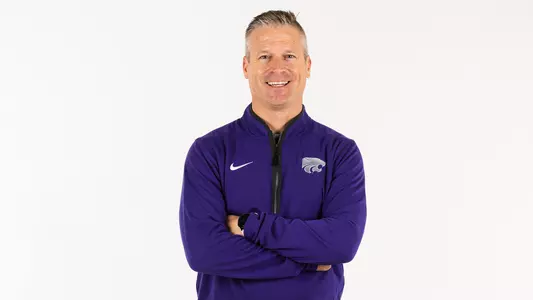
Nick Toth hasn't been here long. He arrived at the Vanier Family Football Complex, looked at the indoor football practice facility, checked out the football field — a football field he played upon in 1997 and coached upon in 2011 — and the former Air Force safeties coach drew an emphatic conclusion.
"The perception of the facilities here, and the gameday environment, and the stadium, and the daily environment for the players, there's a lot of people saying, 'We should update our stuff,'" Toth says. "Well, you should see what Kansas State did. I was at Oregon with really good facilities, but you come to Kansas State, and it immediate rivals what is the top of college football in terms of facilities. It looks like it was built yesterday."
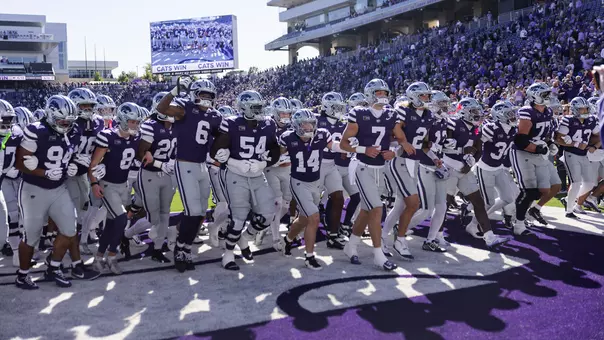
And the field — it's where Toth, then a safety at Ohio University, hung on for dear life as Michael Bishop raced around the backfield for nearly 10 seconds before unfurling a 70-yard pass downfield to wide receiver Gavin Peries on September 13, 1997. K-State posted a narrow 23-20 victory in that game. And the field — it's also where Toth, then a linebackers coach at Texas A&M, saw K-State junior quarterback Collin Klein score the game-winning touchdown — his sixth of the game — in a 53-50 four-overtime thriller on November 11, 2011, at Bill Snyder Family Stadium.
"Those K-State teams were so hard-nosed under Coach Snyder," Toth says. "They'd break your face off."
After a 25-year coaching career in which he has worked with all three levels of the defense, Toth has joined Collin Klein's coaching staff as linebackers coach. This comes after Toth served as safeties coach at Air Force the past four seasons. Among his stops, Toth also served on coaching staffs at Texas A&M, Fresno State, Air Force, UCF, Oregon and Air Force.
At Texas A&M, Toth oversaw the development of linebacker Von Miller, who won the 2010 Butkus Award and became the No. 2 overall pick in the 2011 NFL Draft. At Fresno State, he coached All-American safety Phillip Thomas – a finalist for the 2012 Jim Thorpe Award – after leading the nation with eight interceptions. At Oregon, he coached All-American defensive end Kayvon Thibodeaux, a finalist for the 2021 Chuck Bednarik Award and Bronko Nagurski Trophy, and who became the fifth overall pick in the 2022 NFL Draft. At Air Force, he coached safety Trey Taylor, who won the 2023 Jim Thorpe Award as the nation's top defensive back.
He's anxious to begin the process of shaping K-State's linebackers.
"Everywhere I've been, it's the same, forget physical traits," Toth says. "The great linebackers, those dudes are almost always leaders, and they're leaders every day of the year in the weight room, locker room, and that doesn't mean they're necessarily telling somebody what to do, but they're a model of behavior in terms of preparation. The great ones I've been around, it doesn't mean they're at their best every Monday or Tuesday, but they're working toward a standard every day.
"Every great linebacker I've been around has had an element of leadership and different forms of leadership, and they live to a standard as much as they can. Obviously, you talk about you'd like a 6-foot-4, 260 guy with a 4.5 40, but the work ethic to do it day in and day out is the mentality that a great linebacker is going to have no matter where you're at."
He's appreciated the sentiment shared by K-State's current linebackers on roster.
"They're hungry," Toth says. "They're hungry. K-State went 6-6, and for a lot of people they were happy to be going to a bowl game, but these guys have much higher standards than that. They want to be held to a really high standard, and they're willing to do it right now. They don't want to wait until spring ball.
"It's, 'Coach, I want to get back and get going.'"
Nick Toth spoke with K-State Sports Extra's D. Scott Fritchen about his thoughts on K-State football and his past successes as a coach and the excitement that he feels being a part of Collin Klein's first coaching staff at K-State:

FRITCHEN: When you hear "Kansas State football" what first comes to mind?
TOTH: I played against K-State and Michael Bishop in 1997. I played safety at Ohio University when we came out here in 1997, and we should've won. I recovered an onside kick and was on a fake punt in that game. I was sitting here holding on Bishop's leg, and he chucked that thing 75 yards. A circus play. And I think the catch won the ESPY as the Play of the Year. He had another freaky play. I was hanging onto him as long as I could. Those K-State teams were so hard-nosed under Coach Snyder. They'd break your face off. Gosh, they were good. I grew up respecting guys like that, Coach Snyder, my dad and R.C. Slocum. I hold them all in high regard.
FRITCHEN: Where were you and what were you doing when Collin Klein called and offered you the job as linebackers coach at K-State? What was your immediate reaction?
TOTH: The service academies get an exception in December, and you're allowed to go on the road and recruit. I was on eastern time, woke up and got a workout in, and then I got a text from a number I didn't know that read, "Hey coach, I'd like to talk to you in a couple minutes." I grabbed the phone. As a coach, you can imagine the number of texts you get every day. I was in Cleveland, Ohio, and I text him back, "Thanks for the text. Wouldn't mind hooking up with you. Please tell me who this is?" It was Collin Klein. And then he called. It was really early in the morning for both of us.
FRITCHEN: What was your immediate reaction when Collin Klein called?
TOTH: There were a couple steps in the process. That was when he was offering me the job. I was super excited about the opportunity because, number one, the place and the success the place had, and two, he was giving me an opportunity at that level. He and Shalin and just their attitude toward the football family — there aren't a lot of places that fit what they do — maybe a service academy mantra or style where character and player development in terms of as a human being and as a staff are still important. It's hit and miss across the country. With Coach Klein, that was a really attractive thing for me. He texted me and called me that morning and just the excitement level to be able to be at a place that was committed to the whole thing — obviously, we want to win games at a really high level, but also for it to be about the young man and the football family, it's through the roof. It was a prayer answered. It really was.
FRITCHEN: What did you know about Collin prior to that conversation?
TOTH: At Texas A&M, I coached against him when he was a player in 2011, and Texas A&M came in here and he beat us in four overtimes. More recent, I visited Texas A&M while Collin was there as offensive coordinator and I did clinics with the defensive staff. I was around Coach Klein a bunch then. In terms of personally, socially, I hadn't been around him a whole lot. Geographically, we were in different parts of the country. I was in Oregon and UCF, and he was out there doing what he was doing in his career. We didn't cross paths because of that.
FRITCHEN: Coming from Texas A&M and now wearing the Powercat on your quarter-zip — how does that feel?
TOTH: Awesome. I've thought about this a lot. You can go to a lot of places. There are a lot of really good places to go to out there. But there aren't a lot of places that have been consistently good throughout your lifetime. In my lifetime, there hasn't been a bad downturn for the 'Cats. It just hasn't happened. Coaching wise, the consistency in leadership in my lifetime, that's something that hasn't happened at many places. You take jobs at points in your career, and you're hesitant or not hesitant, because it's really hard to do something for the first time. There's been a commitment here for a long time for doing it at a high level. You talk about putting on the Powercat. It shows immediately that you're at a place that's been serious about stuff for a while. You don't have to prove it to them when people see it. They know it's happened a bunch.

FRITCHEN: When did you arrive in Manhattan? What have been the initial orders of business since joining the football program?
TOTH: I drove in this past Sunday and immediately came to the facility. The perception of the facilities here, and the gameday environment, and the stadium, and the daily environment for the players, there's a lot of people saying, "We should update our stuff." "Well, you should see what Kansas State did." I was at Oregon with really good facilities, but you come to Kansas State and it immediate rivals what is the top of college football in terms of facilities. It looks like it was built yesterday. We landed, came here right away, and I wanted to see the place we were going to be. About an hour, we got on the phone and started trying to find great ways to keep the Wildcats we have, and then how we can put guys that fit in what we want to do. This started immediately. You're on your computer, and you're on the phone FaceTiming players — our players and future guys.
FRITCHEN: What's the vibe you've been getting from current K-State linebackers when you call them for the first time?
TOTH: They're hungry. They're hungry. K-State went 6-6, and for a lot of people they were happy to be going to a bowl game, but these guys have much higher standards than that. They want to be held to a really high standard, and they're willing to do it right now. They don't want to wait until spring ball. It's, "Coach, I want to get back and get going." As a guy who gets to coach them pretty quick, to hear them say, "I'm bummed out that some of our guys left, but I can't wait to get with you Coach, and let's go." As much as you understand the transition with football and recruiting, the players understand it, too, and they've adapted probably better than we have. They're really flexible at things changing by the second. You'd think guys might be hesitant to be invested in a new coach, but these guys are like, "Coach, I can't wait to meet you, and let's go do this together." I don't know if every place is like that, but this place is. That's been really cool being on the phone with those guys.
FRITCHEN: Over your career, you've coached defensive backs, tight ends, defensive line, special teams, nickelbacks, safeties, and finally linebackers — a very well-rounded resume on defense. How have your stops at various colleges and being charged with coaching various position groups help develop you and your talents?
TOTH: The ability to teach is really big, and at the same time you're teaching them what you want them to know and to produce on the field, you're also gathering the feedback from them, and you adjust to who you are and what you're doing for them individually. That's one blessing I've had, is with the different positions I've coached and places I've been able to go, we're around all types of guys, kids from Florida, Ohio, Oregon and California. The different positions I've been blessed to coach — you're in a room with eight guys and the standard you set for them is all the same. The consistency you give them as a human being remains the same, but they need you to teach them a different way. That's maybe one thing I've gained from coaching different positions — shoot, a punter and a kicker, that's as unique of a human as there is. They get one shot to do their job. They don't get eight or nine plays in a row. Those interactions have helped me become better at what I'm doing at the different spots I've been.
FRITCHEN: You previously coached linebacker at Texas A&M in 2010-11, Fresno State in 2012-15 and Oregon in 2021. You think of guys like Dat Nguyen at Texas A&M and Mark Simoneau at K-State — what are the characteristics of a great linebacker?
TOTH: Everywhere I've been, it's the same, forget physical traits. Those dudes are almost always leaders and they're leaders every day of the year in the weight room, locker room, and that doesn't mean they're necessarily telling somebody what to do, but they're a model of behavior in terms of preparation. The great ones I've been around, it doesn't mean they're at their best every Monday or Tuesday, but they're working toward a standard every day. Every great linebacker I've been around has had an element of leadership and different forms of leadership, and they live to a standard as much as they can. Obviously, you talk about you'd like a 6-foot-4, 260 guy with a 4.5 40, but the work ethic to do it day in and day out is the mentality that a great linebacker is going to have no matter where you're at.

FRITCHEN: How would you describe your coaching style?
TOTH: High, high energy. High standards. Being in there with those guys every day, it's easy to celebrate their successes, but it's also learning how to adapt to their failures and not let them drown themselves in their failure and figuring out how to get them to respond to that immediately. That's probably one of the better things we do, the guys that Coach Klein has brought here. A lot of guys here, it's easy to deal with success, but it's how are we able to get these guys to bounce back from failure. Often times, the player is going to drown himself in that. I've been blessed with some passion that allows you to get back some of that. I'm pretty passionate and pretty energetic and really consistent. I'm the same guy every day. Last thing – and maybe the most important thing – is I have a faith foundation. I'm a family man. I took my wife to junior prom. I have four children that are my everything. My players, I'm not their daddy, but I am going to be their big brother, and my family is going to be around them every day like that. I'm going to hug them a whole lot more than I'm going to yell at them.
FRITCHEN: Upon your hiring at K-State, Collin Klein said, "Nick brings a wealth of experience from a schematic and recruiting standpoint." Are you a schematics hound? What do you love about the intricacies of schematics?
TOTH: I love football, and if you're going to be in charge and coordinate at some point, you have a grasp on the whole thing, from the guys putting their hand on the ground to the guys backpedaling and running away from the line of scrimmage. Anybody can do that. Playbooks aren't hard to memorize. The "why" has been important for me. Now, my daddy and granddaddy were both coaches, so I'm probably a little bit blessed to have grown up in that environment. I think my children might be slow and stiff like me maybe as they play college football and do what they do. There's probably more schematic awareness because it's built into a coach's family. But just as importantly, I don't know I'm a scheme hound. When you're young, the scheme is the easiest thing to learn, but recruiting is really the thing. Everybody wants Coach Toth to speak at a clinic, but I win because I have great players. You're going to win when you get really good players who are coachable. Recruiting has really become the deal. I don't mind scheming. I can scheme. But recruiting is the deal and building relationships, trust and love with the players will hopefully help us build success here.
FRITCHEN: Collin also mentioned your wealth of experience from a recruiting standpoint. Being as experienced as you are, you must have many recruiting territories. What are some of the areas you've recruited over the years? What are some keys to being a strong recruiter?
TOTH: Having a background in a certain area certainly helps, but probably not like it used to. It's about going into any family and talking to any kid and looking him in the eye and being honest with him and being clear what your vision is for him and how you feel you can help that young person but also why you think they're going to have success at your place. The second part of that is being upfront with how you're going to deal with failure together, because there's going to be a lot of failure in this process. You can build relationships with the families when you're really upfront with them how you're going to do it. Uniforms, shoes and cool clothes, and NIL money, all that stuff is important, but ultimately, it always comes down to how comfortable the relationship is and how honest it is. When there's honesty, you can have trust, and when there's trust, there can really be love, and when there's love you're going to go beyond what's comfortable.
Whether that's me recruiting back in Texas, where I've recruited for a long time, or going to the Midwest, where I was, but nowadays it's everywhere, we're going to have people come in as freshmen and others come from other places. You go anywhere and build a relationship with them. With Coach Klein, we're probably going to be allowed to be more of ourselves here, as long as we're upfront and say, "This is who we are, and this is the foundation we're looking for from you as a human being. You have high character, and you're a really good player. This is a place you can come and play." Most places don't talk about character when they're recruiting anymore. That's something that maybe sets up apart moving forward across the country.
FRITCHEN: What's your charge with the linebacker room, and do you have an idea how many linebackers you might have on roster?
TOTH: I'd like to start this journey at K-State as a team and specifically in the linebacker room with really good linebackers who are committed to being at our place and that are willing to work and to work for each other and to work together. I don't know exact what the total number of linebackers looks like. We have a bunch of really good guys currently on the roster and some new faces that'll be added. We have some guys who can start and win a bunch of games for us right now on our team. We're a really attractive option for a lot of people who are similar to that who aren't on our team right now. I know this, we're not a team that's going to have 75 or 65 or 55 new guys out of the portal. I don't think that's our core here. People have done a good job recruiting here for a long time. The fear that maybe some of those guys had that are on our roster about the staffing change is being pushed to the side daily, and they realize this place is going to continue to be Kansas State University football, and that Coach Klein is pretty special being in charge of that, and it's going to continue to be what it's been.
FRITCHEN: From that little boy growing up in Cleveland, Ohio, to where you are today, what has Nick Toth learned most about himself during his journey?
TOTH: That you have to have faith. You have to have a foundation that's more than just yourself. The Lord — there's got to be an element there, and you've got to work at it. There were times I wasn't good at it. I was born into it like a lot of young guys in Cleveland, Ohio, and I've grown into that as I've gotten more mature. I married a girl that straightened me out a little bit as well. That's important. There's a lot of inconsistency in the world, and ultimately loving and treating others the right way and having a good foundation there, you're never going to go wrong there. That's the truth.
Nick Toth hasn't been here long. He arrived at the Vanier Family Football Complex, looked at the indoor football practice facility, checked out the football field — a football field he played upon in 1997 and coached upon in 2011 — and the former Air Force safeties coach drew an emphatic conclusion.
"The perception of the facilities here, and the gameday environment, and the stadium, and the daily environment for the players, there's a lot of people saying, 'We should update our stuff,'" Toth says. "Well, you should see what Kansas State did. I was at Oregon with really good facilities, but you come to Kansas State, and it immediate rivals what is the top of college football in terms of facilities. It looks like it was built yesterday."
And the field — it's where Toth, then a safety at Ohio University, hung on for dear life as Michael Bishop raced around the backfield for nearly 10 seconds before unfurling a 70-yard pass downfield to wide receiver Gavin Peries on September 13, 1997. K-State posted a narrow 23-20 victory in that game. And the field — it's also where Toth, then a linebackers coach at Texas A&M, saw K-State junior quarterback Collin Klein score the game-winning touchdown — his sixth of the game — in a 53-50 four-overtime thriller on November 11, 2011, at Bill Snyder Family Stadium.
"Those K-State teams were so hard-nosed under Coach Snyder," Toth says. "They'd break your face off."
After a 25-year coaching career in which he has worked with all three levels of the defense, Toth has joined Collin Klein's coaching staff as linebackers coach. This comes after Toth served as safeties coach at Air Force the past four seasons. Among his stops, Toth also served on coaching staffs at Texas A&M, Fresno State, Air Force, UCF, Oregon and Air Force.
At Texas A&M, Toth oversaw the development of linebacker Von Miller, who won the 2010 Butkus Award and became the No. 2 overall pick in the 2011 NFL Draft. At Fresno State, he coached All-American safety Phillip Thomas – a finalist for the 2012 Jim Thorpe Award – after leading the nation with eight interceptions. At Oregon, he coached All-American defensive end Kayvon Thibodeaux, a finalist for the 2021 Chuck Bednarik Award and Bronko Nagurski Trophy, and who became the fifth overall pick in the 2022 NFL Draft. At Air Force, he coached safety Trey Taylor, who won the 2023 Jim Thorpe Award as the nation's top defensive back.
He's anxious to begin the process of shaping K-State's linebackers.
"Everywhere I've been, it's the same, forget physical traits," Toth says. "The great linebackers, those dudes are almost always leaders, and they're leaders every day of the year in the weight room, locker room, and that doesn't mean they're necessarily telling somebody what to do, but they're a model of behavior in terms of preparation. The great ones I've been around, it doesn't mean they're at their best every Monday or Tuesday, but they're working toward a standard every day.
"Every great linebacker I've been around has had an element of leadership and different forms of leadership, and they live to a standard as much as they can. Obviously, you talk about you'd like a 6-foot-4, 260 guy with a 4.5 40, but the work ethic to do it day in and day out is the mentality that a great linebacker is going to have no matter where you're at."
He's appreciated the sentiment shared by K-State's current linebackers on roster.
"They're hungry," Toth says. "They're hungry. K-State went 6-6, and for a lot of people they were happy to be going to a bowl game, but these guys have much higher standards than that. They want to be held to a really high standard, and they're willing to do it right now. They don't want to wait until spring ball.
"It's, 'Coach, I want to get back and get going.'"
Nick Toth spoke with K-State Sports Extra's D. Scott Fritchen about his thoughts on K-State football and his past successes as a coach and the excitement that he feels being a part of Collin Klein's first coaching staff at K-State:
FRITCHEN: When you hear "Kansas State football" what first comes to mind?
TOTH: I played against K-State and Michael Bishop in 1997. I played safety at Ohio University when we came out here in 1997, and we should've won. I recovered an onside kick and was on a fake punt in that game. I was sitting here holding on Bishop's leg, and he chucked that thing 75 yards. A circus play. And I think the catch won the ESPY as the Play of the Year. He had another freaky play. I was hanging onto him as long as I could. Those K-State teams were so hard-nosed under Coach Snyder. They'd break your face off. Gosh, they were good. I grew up respecting guys like that, Coach Snyder, my dad and R.C. Slocum. I hold them all in high regard.
FRITCHEN: Where were you and what were you doing when Collin Klein called and offered you the job as linebackers coach at K-State? What was your immediate reaction?
TOTH: The service academies get an exception in December, and you're allowed to go on the road and recruit. I was on eastern time, woke up and got a workout in, and then I got a text from a number I didn't know that read, "Hey coach, I'd like to talk to you in a couple minutes." I grabbed the phone. As a coach, you can imagine the number of texts you get every day. I was in Cleveland, Ohio, and I text him back, "Thanks for the text. Wouldn't mind hooking up with you. Please tell me who this is?" It was Collin Klein. And then he called. It was really early in the morning for both of us.
FRITCHEN: What was your immediate reaction when Collin Klein called?
TOTH: There were a couple steps in the process. That was when he was offering me the job. I was super excited about the opportunity because, number one, the place and the success the place had, and two, he was giving me an opportunity at that level. He and Shalin and just their attitude toward the football family — there aren't a lot of places that fit what they do — maybe a service academy mantra or style where character and player development in terms of as a human being and as a staff are still important. It's hit and miss across the country. With Coach Klein, that was a really attractive thing for me. He texted me and called me that morning and just the excitement level to be able to be at a place that was committed to the whole thing — obviously, we want to win games at a really high level, but also for it to be about the young man and the football family, it's through the roof. It was a prayer answered. It really was.
FRITCHEN: What did you know about Collin prior to that conversation?
TOTH: At Texas A&M, I coached against him when he was a player in 2011, and Texas A&M came in here and he beat us in four overtimes. More recent, I visited Texas A&M while Collin was there as offensive coordinator and I did clinics with the defensive staff. I was around Coach Klein a bunch then. In terms of personally, socially, I hadn't been around him a whole lot. Geographically, we were in different parts of the country. I was in Oregon and UCF, and he was out there doing what he was doing in his career. We didn't cross paths because of that.
FRITCHEN: Coming from Texas A&M and now wearing the Powercat on your quarter-zip — how does that feel?
TOTH: Awesome. I've thought about this a lot. You can go to a lot of places. There are a lot of really good places to go to out there. But there aren't a lot of places that have been consistently good throughout your lifetime. In my lifetime, there hasn't been a bad downturn for the 'Cats. It just hasn't happened. Coaching wise, the consistency in leadership in my lifetime, that's something that hasn't happened at many places. You take jobs at points in your career, and you're hesitant or not hesitant, because it's really hard to do something for the first time. There's been a commitment here for a long time for doing it at a high level. You talk about putting on the Powercat. It shows immediately that you're at a place that's been serious about stuff for a while. You don't have to prove it to them when people see it. They know it's happened a bunch.
FRITCHEN: When did you arrive in Manhattan? What have been the initial orders of business since joining the football program?
TOTH: I drove in this past Sunday and immediately came to the facility. The perception of the facilities here, and the gameday environment, and the stadium, and the daily environment for the players, there's a lot of people saying, "We should update our stuff." "Well, you should see what Kansas State did." I was at Oregon with really good facilities, but you come to Kansas State and it immediate rivals what is the top of college football in terms of facilities. It looks like it was built yesterday. We landed, came here right away, and I wanted to see the place we were going to be. About an hour, we got on the phone and started trying to find great ways to keep the Wildcats we have, and then how we can put guys that fit in what we want to do. This started immediately. You're on your computer, and you're on the phone FaceTiming players — our players and future guys.
FRITCHEN: What's the vibe you've been getting from current K-State linebackers when you call them for the first time?
TOTH: They're hungry. They're hungry. K-State went 6-6, and for a lot of people they were happy to be going to a bowl game, but these guys have much higher standards than that. They want to be held to a really high standard, and they're willing to do it right now. They don't want to wait until spring ball. It's, "Coach, I want to get back and get going." As a guy who gets to coach them pretty quick, to hear them say, "I'm bummed out that some of our guys left, but I can't wait to get with you Coach, and let's go." As much as you understand the transition with football and recruiting, the players understand it, too, and they've adapted probably better than we have. They're really flexible at things changing by the second. You'd think guys might be hesitant to be invested in a new coach, but these guys are like, "Coach, I can't wait to meet you, and let's go do this together." I don't know if every place is like that, but this place is. That's been really cool being on the phone with those guys.
FRITCHEN: Over your career, you've coached defensive backs, tight ends, defensive line, special teams, nickelbacks, safeties, and finally linebackers — a very well-rounded resume on defense. How have your stops at various colleges and being charged with coaching various position groups help develop you and your talents?
TOTH: The ability to teach is really big, and at the same time you're teaching them what you want them to know and to produce on the field, you're also gathering the feedback from them, and you adjust to who you are and what you're doing for them individually. That's one blessing I've had, is with the different positions I've coached and places I've been able to go, we're around all types of guys, kids from Florida, Ohio, Oregon and California. The different positions I've been blessed to coach — you're in a room with eight guys and the standard you set for them is all the same. The consistency you give them as a human being remains the same, but they need you to teach them a different way. That's maybe one thing I've gained from coaching different positions — shoot, a punter and a kicker, that's as unique of a human as there is. They get one shot to do their job. They don't get eight or nine plays in a row. Those interactions have helped me become better at what I'm doing at the different spots I've been.
FRITCHEN: You previously coached linebacker at Texas A&M in 2010-11, Fresno State in 2012-15 and Oregon in 2021. You think of guys like Dat Nguyen at Texas A&M and Mark Simoneau at K-State — what are the characteristics of a great linebacker?
TOTH: Everywhere I've been, it's the same, forget physical traits. Those dudes are almost always leaders and they're leaders every day of the year in the weight room, locker room, and that doesn't mean they're necessarily telling somebody what to do, but they're a model of behavior in terms of preparation. The great ones I've been around, it doesn't mean they're at their best every Monday or Tuesday, but they're working toward a standard every day. Every great linebacker I've been around has had an element of leadership and different forms of leadership, and they live to a standard as much as they can. Obviously, you talk about you'd like a 6-foot-4, 260 guy with a 4.5 40, but the work ethic to do it day in and day out is the mentality that a great linebacker is going to have no matter where you're at.
FRITCHEN: How would you describe your coaching style?
TOTH: High, high energy. High standards. Being in there with those guys every day, it's easy to celebrate their successes, but it's also learning how to adapt to their failures and not let them drown themselves in their failure and figuring out how to get them to respond to that immediately. That's probably one of the better things we do, the guys that Coach Klein has brought here. A lot of guys here, it's easy to deal with success, but it's how are we able to get these guys to bounce back from failure. Often times, the player is going to drown himself in that. I've been blessed with some passion that allows you to get back some of that. I'm pretty passionate and pretty energetic and really consistent. I'm the same guy every day. Last thing – and maybe the most important thing – is I have a faith foundation. I'm a family man. I took my wife to junior prom. I have four children that are my everything. My players, I'm not their daddy, but I am going to be their big brother, and my family is going to be around them every day like that. I'm going to hug them a whole lot more than I'm going to yell at them.
FRITCHEN: Upon your hiring at K-State, Collin Klein said, "Nick brings a wealth of experience from a schematic and recruiting standpoint." Are you a schematics hound? What do you love about the intricacies of schematics?
TOTH: I love football, and if you're going to be in charge and coordinate at some point, you have a grasp on the whole thing, from the guys putting their hand on the ground to the guys backpedaling and running away from the line of scrimmage. Anybody can do that. Playbooks aren't hard to memorize. The "why" has been important for me. Now, my daddy and granddaddy were both coaches, so I'm probably a little bit blessed to have grown up in that environment. I think my children might be slow and stiff like me maybe as they play college football and do what they do. There's probably more schematic awareness because it's built into a coach's family. But just as importantly, I don't know I'm a scheme hound. When you're young, the scheme is the easiest thing to learn, but recruiting is really the thing. Everybody wants Coach Toth to speak at a clinic, but I win because I have great players. You're going to win when you get really good players who are coachable. Recruiting has really become the deal. I don't mind scheming. I can scheme. But recruiting is the deal and building relationships, trust and love with the players will hopefully help us build success here.
FRITCHEN: Collin also mentioned your wealth of experience from a recruiting standpoint. Being as experienced as you are, you must have many recruiting territories. What are some of the areas you've recruited over the years? What are some keys to being a strong recruiter?
TOTH: Having a background in a certain area certainly helps, but probably not like it used to. It's about going into any family and talking to any kid and looking him in the eye and being honest with him and being clear what your vision is for him and how you feel you can help that young person but also why you think they're going to have success at your place. The second part of that is being upfront with how you're going to deal with failure together, because there's going to be a lot of failure in this process. You can build relationships with the families when you're really upfront with them how you're going to do it. Uniforms, shoes and cool clothes, and NIL money, all that stuff is important, but ultimately, it always comes down to how comfortable the relationship is and how honest it is. When there's honesty, you can have trust, and when there's trust, there can really be love, and when there's love you're going to go beyond what's comfortable.
Whether that's me recruiting back in Texas, where I've recruited for a long time, or going to the Midwest, where I was, but nowadays it's everywhere, we're going to have people come in as freshmen and others come from other places. You go anywhere and build a relationship with them. With Coach Klein, we're probably going to be allowed to be more of ourselves here, as long as we're upfront and say, "This is who we are, and this is the foundation we're looking for from you as a human being. You have high character, and you're a really good player. This is a place you can come and play." Most places don't talk about character when they're recruiting anymore. That's something that maybe sets up apart moving forward across the country.
FRITCHEN: What's your charge with the linebacker room, and do you have an idea how many linebackers you might have on roster?
TOTH: I'd like to start this journey at K-State as a team and specifically in the linebacker room with really good linebackers who are committed to being at our place and that are willing to work and to work for each other and to work together. I don't know exact what the total number of linebackers looks like. We have a bunch of really good guys currently on the roster and some new faces that'll be added. We have some guys who can start and win a bunch of games for us right now on our team. We're a really attractive option for a lot of people who are similar to that who aren't on our team right now. I know this, we're not a team that's going to have 75 or 65 or 55 new guys out of the portal. I don't think that's our core here. People have done a good job recruiting here for a long time. The fear that maybe some of those guys had that are on our roster about the staffing change is being pushed to the side daily, and they realize this place is going to continue to be Kansas State University football, and that Coach Klein is pretty special being in charge of that, and it's going to continue to be what it's been.
FRITCHEN: From that little boy growing up in Cleveland, Ohio, to where you are today, what has Nick Toth learned most about himself during his journey?
TOTH: That you have to have faith. You have to have a foundation that's more than just yourself. The Lord — there's got to be an element there, and you've got to work at it. There were times I wasn't good at it. I was born into it like a lot of young guys in Cleveland, Ohio, and I've grown into that as I've gotten more mature. I married a girl that straightened me out a little bit as well. That's important. There's a lot of inconsistency in the world, and ultimately loving and treating others the right way and having a good foundation there, you're never going to go wrong there. That's the truth.
Thursday, October 22
Wednesday, October 21
Wednesday, October 21
Wednesday, October 21