SE: Impact from Cats Across Continents Service Trip Felt Long After Wildcats Leave
Dec 26, 2018 | Athletics, Evans Student-Athlete Success Program
By Corbin McGuire
Occasionally, Brian Davis will be walking through Nicaragua and see someone with a K-State T-shirt on. He usually stops whoever it is — more often than not it's a child — and asks them a question he knows the answer to.
"Where'd you get that?"
"From the visitors," they usually respond.
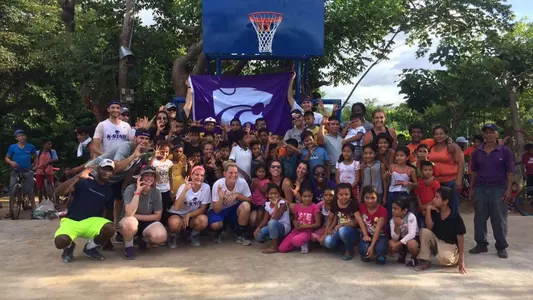
The visitors they refer to were 15 K-State student-athletes and four staff members that spent nine days in Nicaragua for the second Cats Across Continents service trip through Courts for Kids.
Some background on Davis: For the past 10 years, he and his wife, Nancy, have spent half the year in a small community outside Granada, Nicaragua. Before retiring, the two worked in the Peace Corps in Mexico, which eventually led them to building a house in Nicaragua. At first, the couple focused on improving some local schools. Then, they started offering residents cleaner, more efficient wood-burning stoves. Then, they helped open a health clinic with an affordable pharmacy.
Eventually, they were connected with Courts For Kids, which decided to use its partnership with K-State Athletics to build a court in the area. Before the Nicaragua trip, in late July/early August in 2017, Davis knew nothing about K-State, however.
"I knew it existed," he said, "but that's about it."
Now, he's reminded on a daily basis about K-State. Whether it's the gear the Wildcats donated when they left, including everything from headbands, wristbands, T-shirts and sporting equipment, or the court they helped build for the community that is constantly full now, Davis has continued to see the impact the Wildcats left on the community.
"They were terrific. They were unbelievable. They were just the greatest bunch of kids," he said of K-State's representatives. "Some of these organizations build houses, and that's good, it's definitely appreciated, but the beauty of the court is that it's a community thing and it becomes a real focus for the community. That means lots and lots of people benefit from it."
The court has been "incredibly successful," Davis added. Before it, he said the only sport in the community was baseball, a product of the United States' occupation of Nicaragua in the early 1900s.
Now, in a time when Nicaragua is in political disarray, Davis said any positive escape for a community, like the court has been, has gained an amplified importance.
There is a volleyball program with more than 30 local children in it. Basketball and soccer games are held often. There are also leadership training sessions, English classes and reading programs for children held on the court.
"It's just kind of grown. The only problem we have now is we need three courts," Davis said, with a laugh, "because it's always occupied."
To keep everyone involved with the project in the loop, Davis and his wife put out an e-newsletter every few weeks with updates on how it's being used. It's a helpful reminder for the Wildcats who went that what they did is still helping people.
"It's great. It's the whole reason we went down there," K-State men's basketball's Pierson McAtee, who was on the trip, said. "Even though we were only there for nine days, the impact we wanted to make was for, hopefully, a lifetime, or longer than that.
"It's really great to see that the court's being used and the community's growing. The kids are using it, they're staying involved in sports and the right things around that community because it's a troubling time in their country."
The court's impact has undoubtedly been positive and should last for decades. The same can be said of the bonds made during its creation.
Kayla Brock, a former K-State rower who's now a graduate assistant for the coaching staff, still keeps in contact with the family that hosted the Wildcats. Every few weeks, she will chat with one of the family's children through Facebook, mostly just to catch up on life. She even planned to make a return trip with Grace Reilly, now a senior for K-State rowing. Their plane tickets were purchased but, unfortunately, the country's political upheaval forced them to cancel. Still, Brock's planner is covered with pictures from the trip, a positive reminder of what it still means to her.
"They just left a big mark on my heart, and I love them," she said of the Nicaraguan community members. "The connections that I made down there, they mean a lot to me. I kind of tried to bring that back here and make my interactions more intentional."
McAtee said he often thinks of Nicaragua, usually when he comes across a photo from the experience or sees one of the 18 other Wildcats, staff included, that were also there. In these instances, he said he's taken back to the same feeling he had when he was in Nicaragua.
"It was a humbling experience," he said. "Just to see how grateful they were and how hard they worked for the smallest things, and not even thinking anything of it, was pretty special."
In terms of a moment that still stands out from the trip, Davis, Brock and McAtee all agreed on one: The farewell meal they had with their host family. It was a breakfast. Before the end of it, everyone was in tears.
"I could barely eat anything because I was crying so much," Brock said. "The host family's mom is a strong lady; she's kind of like the community leader, and when she started crying the whole group lost it, including the guys. It was nice to see that everyone was touched in a way that was pretty impactful."
"It was an emotional week. I don't know if there was a ton of blood but there was definitely sweat and then tears at the end that were poured out," McAtee added. "It a was very emotional breakfast, but something I'll never forget."
Occasionally, Brian Davis will be walking through Nicaragua and see someone with a K-State T-shirt on. He usually stops whoever it is — more often than not it's a child — and asks them a question he knows the answer to.
"Where'd you get that?"
"From the visitors," they usually respond.
The visitors they refer to were 15 K-State student-athletes and four staff members that spent nine days in Nicaragua for the second Cats Across Continents service trip through Courts for Kids.
Some background on Davis: For the past 10 years, he and his wife, Nancy, have spent half the year in a small community outside Granada, Nicaragua. Before retiring, the two worked in the Peace Corps in Mexico, which eventually led them to building a house in Nicaragua. At first, the couple focused on improving some local schools. Then, they started offering residents cleaner, more efficient wood-burning stoves. Then, they helped open a health clinic with an affordable pharmacy.
Eventually, they were connected with Courts For Kids, which decided to use its partnership with K-State Athletics to build a court in the area. Before the Nicaragua trip, in late July/early August in 2017, Davis knew nothing about K-State, however.
"I knew it existed," he said, "but that's about it."
Now, he's reminded on a daily basis about K-State. Whether it's the gear the Wildcats donated when they left, including everything from headbands, wristbands, T-shirts and sporting equipment, or the court they helped build for the community that is constantly full now, Davis has continued to see the impact the Wildcats left on the community.
"They were terrific. They were unbelievable. They were just the greatest bunch of kids," he said of K-State's representatives. "Some of these organizations build houses, and that's good, it's definitely appreciated, but the beauty of the court is that it's a community thing and it becomes a real focus for the community. That means lots and lots of people benefit from it."
The court has been "incredibly successful," Davis added. Before it, he said the only sport in the community was baseball, a product of the United States' occupation of Nicaragua in the early 1900s.
Now, in a time when Nicaragua is in political disarray, Davis said any positive escape for a community, like the court has been, has gained an amplified importance.
There is a volleyball program with more than 30 local children in it. Basketball and soccer games are held often. There are also leadership training sessions, English classes and reading programs for children held on the court.
"It's just kind of grown. The only problem we have now is we need three courts," Davis said, with a laugh, "because it's always occupied."
To keep everyone involved with the project in the loop, Davis and his wife put out an e-newsletter every few weeks with updates on how it's being used. It's a helpful reminder for the Wildcats who went that what they did is still helping people.
"It's great. It's the whole reason we went down there," K-State men's basketball's Pierson McAtee, who was on the trip, said. "Even though we were only there for nine days, the impact we wanted to make was for, hopefully, a lifetime, or longer than that.
"It's really great to see that the court's being used and the community's growing. The kids are using it, they're staying involved in sports and the right things around that community because it's a troubling time in their country."
The court's impact has undoubtedly been positive and should last for decades. The same can be said of the bonds made during its creation.
Kayla Brock, a former K-State rower who's now a graduate assistant for the coaching staff, still keeps in contact with the family that hosted the Wildcats. Every few weeks, she will chat with one of the family's children through Facebook, mostly just to catch up on life. She even planned to make a return trip with Grace Reilly, now a senior for K-State rowing. Their plane tickets were purchased but, unfortunately, the country's political upheaval forced them to cancel. Still, Brock's planner is covered with pictures from the trip, a positive reminder of what it still means to her.
"They just left a big mark on my heart, and I love them," she said of the Nicaraguan community members. "The connections that I made down there, they mean a lot to me. I kind of tried to bring that back here and make my interactions more intentional."
McAtee said he often thinks of Nicaragua, usually when he comes across a photo from the experience or sees one of the 18 other Wildcats, staff included, that were also there. In these instances, he said he's taken back to the same feeling he had when he was in Nicaragua.
"It was a humbling experience," he said. "Just to see how grateful they were and how hard they worked for the smallest things, and not even thinking anything of it, was pretty special."
In terms of a moment that still stands out from the trip, Davis, Brock and McAtee all agreed on one: The farewell meal they had with their host family. It was a breakfast. Before the end of it, everyone was in tears.
"I could barely eat anything because I was crying so much," Brock said. "The host family's mom is a strong lady; she's kind of like the community leader, and when she started crying the whole group lost it, including the guys. It was nice to see that everyone was touched in a way that was pretty impactful."
"It was an emotional week. I don't know if there was a ton of blood but there was definitely sweat and then tears at the end that were poured out," McAtee added. "It a was very emotional breakfast, but something I'll never forget."




K-State Baseball | Highlights vs Michigan - Feb. 22, 2026
Monday, February 23
K-State Men's Basketball | Postgame Press Conference at Texas Tech
Sunday, February 22
K-State Women's Basketball | Tess Heal Senior Video
Sunday, February 22
K-State Women's Basketball | Mikayla Parks Senior Video
Sunday, February 22