Jan 30, 2026 | Athletics
Brian Smoller (BS): Hello and welcome to another edition of Ask the AD. Brian Smoller and Director of Athletics, Gene Taylor, with you, and we're glad that you could join us as well. And while certainly there could be a lot of fan questions to answer, we have a lot to get to today, so we're actually going to hold off on fan questions, save them up and wait for our next Ask the AD here in a month or two, and then we'll get back to the doing fan questions. Well, we got a lot to cover here today.
Gene Taylor (GT): We do. A lot of stuff going on, but good stuff.
BS: That's right. Exciting things. And we'll start with football, because we're about 50 days, little over the first 50 days of the Collin Klein era here at K-State. What's your takeaway from his first 50 days and his staff?
GT: Well, I don't know that he slept much. I think he's been hard at it since the day we got him here and brought him here for his press conference. I think he's been non-stop since. He's really excited about the staff he's put together. I think from a football coaching perspective, he's got all of his staff hired analysts and GA's and all those. I think there's some other support staff positions that he's looking at. Very excited about the process through the transfer portal and who he's able to sign. So they've been busy, and they're out on the road recruiting right now. So you know, it's been so I think comfortable for Collin, because obviously he's been here, and he knows everybody. Obviously we've had him at events, and I go to introduce him, and I realize, 'Oh, you've known Collin already'. But he's been busy, and he's really been aggressive, and really feels good about the staff he's put together and what he's done in the in the transfer portal.
BS: And he obviously had a mind of what he wanted to do, how he wanted it to align with the general manager and Trey Scott and everyone else that's in the development and scouting, the areas and all that. The commitment level from K-State to football has always been significant. Has it changed or increased since he's been on board?
GT: It's obviously been big. And anytime you have a coaching change, you know, they're going to bring in new ideas and new thoughts. And you know, we gave him some numbers in which to work with from a staff that was certainly, you know, a little bit more than we had in the past. But you know, he's been really good about managing that and making sure he stays within that number, and then coming up with other ideas. And that's a good thing. That's what you want. You want a coach that's going to come in and push it and push it hard and challenge you a little bit, which he's done. I just really appreciate the conversations we've had and him understanding, you know, kind of where we are, but yeah, you always got to invest as much as you can to give them a chance to be successful.
BS: You recently took a trip to Topeka with the other athletic directors from the D1 programs in the state. What was the purpose of the visit?
GT: Yeah, you know, it's really, was more about education, about kind of where college athletics is and and really talk about the the economic impact all three schools have in the state. We had a company called Tripp Umbach do an economic impact study of all three schools. And the one number that stands out to me that we presented to the joint session of the Commerce Department of the Senate and the House was we bring $1.55 billion of revenue to the state in the three schools, which is a very big number. And we just wanted to let them know that we are a valuable asset to the state as we kind of go through the challenges of the financial challenges of our new world, of the 20.5 million. That they may need to consider helping us as other states across the country are helping their athletic programs. It's a challenge, and I understand that, but it was really more of a 'hey, this is where the world is in college athletics today, but yet, remember that we are an economic impact driver to the state, not just KU or K-State, but Wichita State. And collectively, what we bring to the state and our various communities is a pretty big number.'
BS: Certainly the combined three schools, as you mentioned, right now, ahead of the Chiefs moving to Kansas, they are the largest sports gatherings every year or every week, every home game, every home event. Certainly for K-State, the largest group of fans for every sporting event every six to seven home dates for football. It's interesting because the athletic departments overall having to deal with new costs. You see some athletic departments across the country and even peer institutions in this region, like Missouri, are dealing with deficits, significant deficits, and that's with supposed great big monies from SEC and Big 10. I mean, Rutgers, what? Almost $78 million in deficit. We are not in deficit here at K-State. We're one of three institutions that do not receive much from campus or haven't historically and have been self sufficient, and in fact, are paying $10 million to campus because of fees and other things. How does this comport with what you went to Topeka to talk about?
GT: I think it's really more about, again, education. Obviously, at K-State, we every year have to balance our budget. We have to make sure that we don't have a deficit spending because in the past, the campus has not been able to help us. Obviously, there's discussions, and we're looking at trying to find a way for campus to help us going forward, and I think that's going to be a possibility. But when you look at the financial challenges, when you just get added a new budget line item of $20.5 million it's going to go up 4% every year. Right now, we've asked our donors to step up, and we found other ways. We've found other dollars to fund that. We have to get help from other sources. As everybody across the country has figured this out, is that the states have stepped in, the local communities have stepped in. Obviously, campuses have stepped in across the country. And so it's really more about, 'hey, this is the challenge, and in order for us to be successful and continue to drive an economic impact by filling our stadiums and filling our hotels and filling our restaurants, if we're not successful, those things don't happen.' And you know, we talked a little bit about to some of the legislators about what happened to Washington State and Oregon State when the PAC 12 fell apart. We need to position ourselves to make sure if there's another movement down the road, that we're financially set and competitively set, to make sure we're part of that conversation. And if that doesn't happen, then we could face some really big challenges. And so really more about education. Here's the reality and the data which we're facing. Here are some ways we hope there's some help coming down the road.
BS: Another avenue, of course, and when it comes to thinking about supporting K-State and the future of athletics is NIL. Recently we talked about Wildcat NIL being absorbed into K-State, and now you have the addition of new positions, Julie Owen, who kind of overseeing that for us, returning here, and then Brett Foltz as well. We'll talk about Brett more in a moment. But from an NIL perspective, what are their responsibilities and how does that work with the overall operation funds for K-State?
GT: Yeah. I mean, obviously Julie has come in, and she has a compliance background, and she's come in and really helped us with the sausage making side of things. In terms of making sure our contracts are followed, making sure that the athletes are getting their above the cap NIL into NIL Go. Helping with our in-house attorney and working with the athletes, making sure they have everything in place, dealing with some agents in terms of managing those contracts as athletes leave, making sure those athletes understand what it says in their contract, that there might be a potential buyout, etc. So that's Julie's role. Brett's role is now to find what we call 'above the cap NIL', and that's anything that's true NIL, name, image and likeness. And how can we find companies, whether locally or nationally, to be a part of that true NIL above the cap. And that's where the difference is going to be for us. Obviously, we need to still fund the 20.5 million as it goes up, but we need to find companies and folks locally and nationally that really want to put into our athletes a true NIL above the cap numbers.
BS: So if you're interested in that, if you're a business owner and are interested in NIL, Brett Foltz is the contact person. We'll put his email up here on this, and you can check out and email Brett and find out more information about how to be a part of that. I think the bigger conversation, it sounds like to me, anyway, that you have two sort of buckets right here that we're talking about giving to.
GT: As I talk to our staff and I talked to donors to try to help them understand, really where the world is. We have our operational bucket, and that's everything from ticket sales and sponsorship to Ahearn Fund dollars. That has to continue to grow. And then we have above the cap NIL, which is corporate NIL, name, image and likeness opportunities. And those two buckets have to continue to grow. But we can't take from the Ahearn Fund and operational dollars and put into the NIL dollars. It has to be dollars here and here. And if you think about when we've been building all these facilities, we've been able to do that. When we ask a donor to help us with the Shamrock Zone, the West Stadium, Center, Vanier - they didn't reduce their amount from the Ahearn Fund. They gave additional amount to build that facility. The above the campaign NIL is now our new facility campaign, and we need them to give to both and find creative ways to do that. So we really need to continue to grow our revenue. For instance, we're at $95 million a year. That's really difficult to hit every year without a lot of help, and that's got to grow significantly. And so really it's two buckets, operational dollars and above the cap dollars. But we can't take from this bucket to fill this bucket.
BS: Makes perfect sense. And I think if you're a general fan, if you're not a business owner, and you want to have an interest in NIL, I think there is an avenue to do that coming soon. It's called Cats+. And if anybody's gone to the website, the new kstatesports.com, the new look of it, and played around with it, look through different things, you may have stumbled across Cats+. It is coming, and it seems like that would be the individual way to help out.
GT: Sure. And that's what we want, to make sure everybody has an opportunity to give. You can help in so many ways: buy single game tickets and, you know, just come to games, and that's always going to help. But then, if you're looking for a way to help athletes and help fund one of those buckets, Cats+ is a new opportunity coming in a few weeks. It's a behind the scenes. It's a subscription based opportunity that as a fan, you're going to get access to things that you typically wouldn't get, whether it's giveaways, whether it's specialized content, whether it's history of games. Those dollars will go to help fill those buckets, and it's a way to do that. And then you get benefits as a fan to enjoy some really unique content behind the scenes, stuff for a fan that typically wouldn't get.
BS: Yeah, absolutely. And we've already put together a great library and catalog of things that will be unveiled with Cats+. So stay tuned for that announcement that will be coming again, as Gene said, in the next couple of weeks. Should be really, really great stuff for K-State fans. And this is not altogether different from what you may see at other schools. A lot of other schools have done this same sort of thing. Another revenue stream that we've talked about before and wanted to ask you about for an update on, is jersey patches, on the field/court logos, on the stadium logos and naming rights, all those sorts of things. Who's responsible for selling those and where is that process?
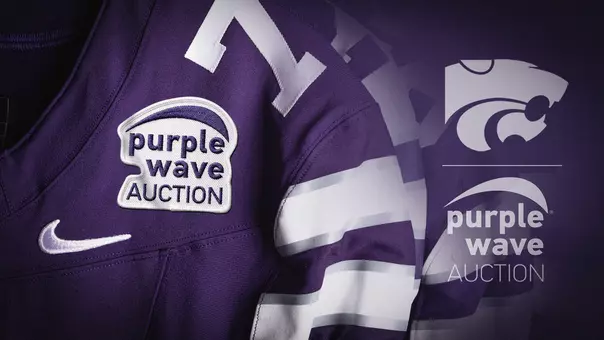
GT: Absolutely, Learfield is our media rights holder, and they sell a lot of our sponsorship and those opportunities. The jersey patches, finally got approved from the administrative cabinet. Now it goes to the sport oversight committees to figure out where those patches will go. The biggest size is a two by two or four square inch patch. How many can be put on, whether it's football or basketball. So we're going to be pretty aggressive in going out and either working with Learfield or going out and finding. Now the conference wants to do a patch for you know, conference championships, potentially in the CFP and so it all has to come together. But for us, for our regular season games in both football and basketball and all of our other sports, we're going to be able to go out and sell a jersey patch. Now, how we do that, I think, is going to be something we're going to continue to look at, but be aggressive about. Do we sell one patch for all of our sports? Do we sell a patch for football and then go out find a sponsor for the two basketballs? Or do we go out and find a sponsor for the Olympic sports? And so those are things that we're talking about right now, but we're going to be aggressive and find the right, you know, the right sponsorship and the right folks that want to help K-State, but that would be an additional sort of revenue that we're looking for, that we're going to need to help fill those buckets. And then obviously, the field logo we've been working on for a while. That's a bigger number, and so that takes a little bit longer time, but I think these jersey patches could bring in significant revenue as well.
BS: The key words that I've heard during our conversation here today are creative, aggressive. It's interesting when you don't know what's going on, as the general fans. They are sitting out there and they're seeing. They don't get the updates, because things are still fluid and in motion. They assume nothing's happening. It seems like it's not bad at all. There's a flurry of activity behind the scenes.
GT: Yeah, I think that's the thing. It's been behind the scenes primarily because we're trying to figure it out. Things have been changing so quickly. We literally went from before July 1 of funding things differently, to July 1 hit, to finding the 20 million, to figuring out how the above the cap works and the true NIL. It's just been so fluid that as we're trying to figure out how to manage that, we've been able to finally take a step back and say, 'Okay, here's where we need to put our emphasis.' And our emphasis needs to be in these two buckets, and how to fill those. And one is, again, above the cap NIL, creative ways to find other revenue sources so we're not just riding on the backs of 100% of our donors. We're going to the state, going to the local community. I mean, all those things are big pieces that we need to talk about. We need to get out there a little bit more publicly and have these conversations and help people understand the world in which we live in, and it's just taken a while to figure all this out.
BS: In the meantime, Kansas State continues to move forward with seasons, and as we said, we didn't get into all that today, with hoops and baseball coming online, track and field, with a massive event coming up this week, and there's a lot going on, and we'll get into a lot of those things coming up in our next Ask the AD. We just weren't able to get to it all today. But thank you for taking the time to get through all this, because this is important. Encourage people to go to the website. You can go to many different locations on kstatesports.com including support. There's a drop down menu that says K-State NIL, gives everything you need to know of what we talked about here today.
GT: And we appreciate it like I said. We'll get back and we'll talk about sports, but this is so critical now for all of our programs to really continue to stay competitive. And if we're not competitive, we all know what happens when that happens, and we've seen it before, and we don't want that to happen again.
BS: Yeah, not just a downer for K-State fans, but for the entirety of the state benefits, the entirety of the state of all Kansans across from border to border. Thanks Gene for doing this.
GT: Appreciate it, Brian. Thank you.
BS: All right, for Gene Taylor, for Preston Koerner, who puts these all together, and Cam Bradley, who will help with this one as well. I'm Brian Smoller. Thank you for watching Ask the AD.
Gene Taylor (GT): We do. A lot of stuff going on, but good stuff.
BS: That's right. Exciting things. And we'll start with football, because we're about 50 days, little over the first 50 days of the Collin Klein era here at K-State. What's your takeaway from his first 50 days and his staff?
GT: Well, I don't know that he slept much. I think he's been hard at it since the day we got him here and brought him here for his press conference. I think he's been non-stop since. He's really excited about the staff he's put together. I think from a football coaching perspective, he's got all of his staff hired analysts and GA's and all those. I think there's some other support staff positions that he's looking at. Very excited about the process through the transfer portal and who he's able to sign. So they've been busy, and they're out on the road recruiting right now. So you know, it's been so I think comfortable for Collin, because obviously he's been here, and he knows everybody. Obviously we've had him at events, and I go to introduce him, and I realize, 'Oh, you've known Collin already'. But he's been busy, and he's really been aggressive, and really feels good about the staff he's put together and what he's done in the in the transfer portal.
BS: And he obviously had a mind of what he wanted to do, how he wanted it to align with the general manager and Trey Scott and everyone else that's in the development and scouting, the areas and all that. The commitment level from K-State to football has always been significant. Has it changed or increased since he's been on board?
GT: It's obviously been big. And anytime you have a coaching change, you know, they're going to bring in new ideas and new thoughts. And you know, we gave him some numbers in which to work with from a staff that was certainly, you know, a little bit more than we had in the past. But you know, he's been really good about managing that and making sure he stays within that number, and then coming up with other ideas. And that's a good thing. That's what you want. You want a coach that's going to come in and push it and push it hard and challenge you a little bit, which he's done. I just really appreciate the conversations we've had and him understanding, you know, kind of where we are, but yeah, you always got to invest as much as you can to give them a chance to be successful.
BS: You recently took a trip to Topeka with the other athletic directors from the D1 programs in the state. What was the purpose of the visit?
GT: Yeah, you know, it's really, was more about education, about kind of where college athletics is and and really talk about the the economic impact all three schools have in the state. We had a company called Tripp Umbach do an economic impact study of all three schools. And the one number that stands out to me that we presented to the joint session of the Commerce Department of the Senate and the House was we bring $1.55 billion of revenue to the state in the three schools, which is a very big number. And we just wanted to let them know that we are a valuable asset to the state as we kind of go through the challenges of the financial challenges of our new world, of the 20.5 million. That they may need to consider helping us as other states across the country are helping their athletic programs. It's a challenge, and I understand that, but it was really more of a 'hey, this is where the world is in college athletics today, but yet, remember that we are an economic impact driver to the state, not just KU or K-State, but Wichita State. And collectively, what we bring to the state and our various communities is a pretty big number.'
BS: Certainly the combined three schools, as you mentioned, right now, ahead of the Chiefs moving to Kansas, they are the largest sports gatherings every year or every week, every home game, every home event. Certainly for K-State, the largest group of fans for every sporting event every six to seven home dates for football. It's interesting because the athletic departments overall having to deal with new costs. You see some athletic departments across the country and even peer institutions in this region, like Missouri, are dealing with deficits, significant deficits, and that's with supposed great big monies from SEC and Big 10. I mean, Rutgers, what? Almost $78 million in deficit. We are not in deficit here at K-State. We're one of three institutions that do not receive much from campus or haven't historically and have been self sufficient, and in fact, are paying $10 million to campus because of fees and other things. How does this comport with what you went to Topeka to talk about?
GT: I think it's really more about, again, education. Obviously, at K-State, we every year have to balance our budget. We have to make sure that we don't have a deficit spending because in the past, the campus has not been able to help us. Obviously, there's discussions, and we're looking at trying to find a way for campus to help us going forward, and I think that's going to be a possibility. But when you look at the financial challenges, when you just get added a new budget line item of $20.5 million it's going to go up 4% every year. Right now, we've asked our donors to step up, and we found other ways. We've found other dollars to fund that. We have to get help from other sources. As everybody across the country has figured this out, is that the states have stepped in, the local communities have stepped in. Obviously, campuses have stepped in across the country. And so it's really more about, 'hey, this is the challenge, and in order for us to be successful and continue to drive an economic impact by filling our stadiums and filling our hotels and filling our restaurants, if we're not successful, those things don't happen.' And you know, we talked a little bit about to some of the legislators about what happened to Washington State and Oregon State when the PAC 12 fell apart. We need to position ourselves to make sure if there's another movement down the road, that we're financially set and competitively set, to make sure we're part of that conversation. And if that doesn't happen, then we could face some really big challenges. And so really more about education. Here's the reality and the data which we're facing. Here are some ways we hope there's some help coming down the road.
BS: Another avenue, of course, and when it comes to thinking about supporting K-State and the future of athletics is NIL. Recently we talked about Wildcat NIL being absorbed into K-State, and now you have the addition of new positions, Julie Owen, who kind of overseeing that for us, returning here, and then Brett Foltz as well. We'll talk about Brett more in a moment. But from an NIL perspective, what are their responsibilities and how does that work with the overall operation funds for K-State?
GT: Yeah. I mean, obviously Julie has come in, and she has a compliance background, and she's come in and really helped us with the sausage making side of things. In terms of making sure our contracts are followed, making sure that the athletes are getting their above the cap NIL into NIL Go. Helping with our in-house attorney and working with the athletes, making sure they have everything in place, dealing with some agents in terms of managing those contracts as athletes leave, making sure those athletes understand what it says in their contract, that there might be a potential buyout, etc. So that's Julie's role. Brett's role is now to find what we call 'above the cap NIL', and that's anything that's true NIL, name, image and likeness. And how can we find companies, whether locally or nationally, to be a part of that true NIL above the cap. And that's where the difference is going to be for us. Obviously, we need to still fund the 20.5 million as it goes up, but we need to find companies and folks locally and nationally that really want to put into our athletes a true NIL above the cap numbers.
BS: So if you're interested in that, if you're a business owner and are interested in NIL, Brett Foltz is the contact person. We'll put his email up here on this, and you can check out and email Brett and find out more information about how to be a part of that. I think the bigger conversation, it sounds like to me, anyway, that you have two sort of buckets right here that we're talking about giving to.
GT: As I talk to our staff and I talked to donors to try to help them understand, really where the world is. We have our operational bucket, and that's everything from ticket sales and sponsorship to Ahearn Fund dollars. That has to continue to grow. And then we have above the cap NIL, which is corporate NIL, name, image and likeness opportunities. And those two buckets have to continue to grow. But we can't take from the Ahearn Fund and operational dollars and put into the NIL dollars. It has to be dollars here and here. And if you think about when we've been building all these facilities, we've been able to do that. When we ask a donor to help us with the Shamrock Zone, the West Stadium, Center, Vanier - they didn't reduce their amount from the Ahearn Fund. They gave additional amount to build that facility. The above the campaign NIL is now our new facility campaign, and we need them to give to both and find creative ways to do that. So we really need to continue to grow our revenue. For instance, we're at $95 million a year. That's really difficult to hit every year without a lot of help, and that's got to grow significantly. And so really it's two buckets, operational dollars and above the cap dollars. But we can't take from this bucket to fill this bucket.
BS: Makes perfect sense. And I think if you're a general fan, if you're not a business owner, and you want to have an interest in NIL, I think there is an avenue to do that coming soon. It's called Cats+. And if anybody's gone to the website, the new kstatesports.com, the new look of it, and played around with it, look through different things, you may have stumbled across Cats+. It is coming, and it seems like that would be the individual way to help out.
GT: Sure. And that's what we want, to make sure everybody has an opportunity to give. You can help in so many ways: buy single game tickets and, you know, just come to games, and that's always going to help. But then, if you're looking for a way to help athletes and help fund one of those buckets, Cats+ is a new opportunity coming in a few weeks. It's a behind the scenes. It's a subscription based opportunity that as a fan, you're going to get access to things that you typically wouldn't get, whether it's giveaways, whether it's specialized content, whether it's history of games. Those dollars will go to help fill those buckets, and it's a way to do that. And then you get benefits as a fan to enjoy some really unique content behind the scenes, stuff for a fan that typically wouldn't get.
BS: Yeah, absolutely. And we've already put together a great library and catalog of things that will be unveiled with Cats+. So stay tuned for that announcement that will be coming again, as Gene said, in the next couple of weeks. Should be really, really great stuff for K-State fans. And this is not altogether different from what you may see at other schools. A lot of other schools have done this same sort of thing. Another revenue stream that we've talked about before and wanted to ask you about for an update on, is jersey patches, on the field/court logos, on the stadium logos and naming rights, all those sorts of things. Who's responsible for selling those and where is that process?
GT: Absolutely, Learfield is our media rights holder, and they sell a lot of our sponsorship and those opportunities. The jersey patches, finally got approved from the administrative cabinet. Now it goes to the sport oversight committees to figure out where those patches will go. The biggest size is a two by two or four square inch patch. How many can be put on, whether it's football or basketball. So we're going to be pretty aggressive in going out and either working with Learfield or going out and finding. Now the conference wants to do a patch for you know, conference championships, potentially in the CFP and so it all has to come together. But for us, for our regular season games in both football and basketball and all of our other sports, we're going to be able to go out and sell a jersey patch. Now, how we do that, I think, is going to be something we're going to continue to look at, but be aggressive about. Do we sell one patch for all of our sports? Do we sell a patch for football and then go out find a sponsor for the two basketballs? Or do we go out and find a sponsor for the Olympic sports? And so those are things that we're talking about right now, but we're going to be aggressive and find the right, you know, the right sponsorship and the right folks that want to help K-State, but that would be an additional sort of revenue that we're looking for, that we're going to need to help fill those buckets. And then obviously, the field logo we've been working on for a while. That's a bigger number, and so that takes a little bit longer time, but I think these jersey patches could bring in significant revenue as well.
BS: The key words that I've heard during our conversation here today are creative, aggressive. It's interesting when you don't know what's going on, as the general fans. They are sitting out there and they're seeing. They don't get the updates, because things are still fluid and in motion. They assume nothing's happening. It seems like it's not bad at all. There's a flurry of activity behind the scenes.
GT: Yeah, I think that's the thing. It's been behind the scenes primarily because we're trying to figure it out. Things have been changing so quickly. We literally went from before July 1 of funding things differently, to July 1 hit, to finding the 20 million, to figuring out how the above the cap works and the true NIL. It's just been so fluid that as we're trying to figure out how to manage that, we've been able to finally take a step back and say, 'Okay, here's where we need to put our emphasis.' And our emphasis needs to be in these two buckets, and how to fill those. And one is, again, above the cap NIL, creative ways to find other revenue sources so we're not just riding on the backs of 100% of our donors. We're going to the state, going to the local community. I mean, all those things are big pieces that we need to talk about. We need to get out there a little bit more publicly and have these conversations and help people understand the world in which we live in, and it's just taken a while to figure all this out.
BS: In the meantime, Kansas State continues to move forward with seasons, and as we said, we didn't get into all that today, with hoops and baseball coming online, track and field, with a massive event coming up this week, and there's a lot going on, and we'll get into a lot of those things coming up in our next Ask the AD. We just weren't able to get to it all today. But thank you for taking the time to get through all this, because this is important. Encourage people to go to the website. You can go to many different locations on kstatesports.com including support. There's a drop down menu that says K-State NIL, gives everything you need to know of what we talked about here today.
GT: And we appreciate it like I said. We'll get back and we'll talk about sports, but this is so critical now for all of our programs to really continue to stay competitive. And if we're not competitive, we all know what happens when that happens, and we've seen it before, and we don't want that to happen again.
BS: Yeah, not just a downer for K-State fans, but for the entirety of the state benefits, the entirety of the state of all Kansans across from border to border. Thanks Gene for doing this.
GT: Appreciate it, Brian. Thank you.
BS: All right, for Gene Taylor, for Preston Koerner, who puts these all together, and Cam Bradley, who will help with this one as well. I'm Brian Smoller. Thank you for watching Ask the AD.


Thursday, October 22
Wednesday, October 21
Wednesday, October 21
Wednesday, October 21