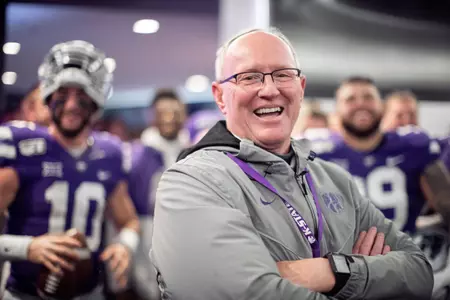
SE: Q&A with Gene Taylor on Student-Athlete Resilience and K-State Sports After COVID-19
Apr 10, 2020 | Sports Extra
K-State Director of Athletics Gene Taylor spoke with Austin Siegel of K-State Sports Extra this week about where the Wildcats stand one month after college sports across the country were put on hold due to COVID-19. The conversation has been condensed and edited for clarity.
AS: What's on the agenda for your call with the other Big 12 athletic directors this week?
GT: The primary agenda the last couple of times has been extended eligibility for spring-sport athletes. We've been reviewing financially what things might look like, but we still haven't come to a conclusion. Today's call will probably be more on the financial front.
At some point, I'm sure we will talk about the "what ifs?" around football, but as of yet, we haven't really spent a whole lot of time talking about that.
AS: Whether it's coaching salaries or building new facilities, do you have a sense that COVID-19 is going to have an impact on the "arms race" aspect of college sports?
GT: I hope we don't have a short-term memory with this, because we are going to see some kind of an impact even if we get back to normal. I do think some fans are going to stay away, I think you're going to see a reduction in revenue and also some things that we can probably live without. We'll see.
That's a great question and I hope that we can rein some stuff in, but if a year or two down the road we're back to full stadiums and the market is doing OK, I could see us getting back to where we were. I do think it has caused us to collectively, as a business, take a pause and go, 'OK, we were living pretty well. Let's take a step back and see the spending that we can do without and still run a good department and be successful.'
AS: The consensus among many ADs seems to be that they are focused on getting through COVID-19 right now, while preparing for every possible contingency. Is that fair to say?
GT: That's fair. Obviously, we're trying to figure out if we can start football on time or as close to on time as possible. All of us really have come up with various scenarios even if we do start football in the fall. We're all planning for some reduction in ticket sales. People will have lost jobs, and I think there could be a concern about going into a stadium with a bunch of people you don't know. We're all planning for those budget issues.
AS: Having worked as an AD at different levels of college athletics, how is a Power 5 program like K-State positioned differently during something like this than other schools?
GT: One of the benefits and challenges sometimes is that we're self-funded. When you're at North Dakota State or some other school outside the Power 5, a portion of your budget is from student fees. When the university is facing financial challenges, athletics are usually the first place where there are going to be cuts. Not only are you going to lose NCAA money and ticket revenue, now you are going to lose your funds from the university.
At K-State, we don't have to deal with losing that piece. It's a little bit better, but at the same time, you've got to generate everything yourself. We are fairly efficient with our budget, and we know that as long as we can generate the revenue that we need to generate, we should be OK.
AS: According to a recent survey of FBS athletic directors from LEAD1, their number one concern over the next few months is the morale and culture of their department. What gives you hope that K-State is going to be able to see this thing through?
GT: We've got a great staff and they've always cared a great deal about K-State. We're trying to stay in touch with them as much as we can, whether it's individually or in our group Zoom calls. I think they understand that it's a different time right now. I feel pretty confident that everyone is hanging in there, but I also know that we have good communicators whether it's the sport administrators or the department heads, they're trying to stay on top of folks that are concerned.
I think it's so far so good, but the longer we're apart, the harder it's going to be to stay positive. As the country sees things begin to unfold and get a little better, I think the hope will come back that we're going to get back to normal.
AS: With remote classes beginning this month, how much of your focus has been on academic progress among student-athletes?
GT: Kristin Waller [K-State's Associate AD of Student-Athlete Services] and her staff have been working very hard for a couple of reasons. Number one, tutoring sessions aren't the same as meeting in person. They also need to make sure our athletes understand the new grading system, with some classes offering letter grades or pass/fail, and that our athletes understand the implications of making the right decision. They've got a great staff down there. Between the coaches and academic advisors, they're been great about pushing our student-athletes. It's critical to stay academically eligible so that when this thing starts up again, we're ready to roll.

AS: On that same note, what sort of mental health resources are available for student-athletes during this time?
GT: [K-State Director of Mental Wellness/Sport Psychology] Anne Weese does a really tremendous job for us. She has her individual clients that she's staying focused on and then she does some different stuff with teams and coaches over Zoom. Our student-athlete development folks are still keeping the kids engaged. It's about doing as much as we can.
The fact that our student-athletes can get in touch with their coaches and do the X's and O's, so to speak, I think that helps them get focused a little bit more. I think when they can see their teammates faces and hear their voices on Zoom, every little bit helps when you're trying to stay in touch. I know Anne has reached out across the country for kids that are struggling and found some folks locally that can help them. She's done a great job with that. But it's a big piece between academics and mental health. It's so different for our athletes, they've never really experienced anything like this.
AS: Have you seen any of the videos that different teams have done, whether it's football and women's basketball pulling things out of the fridge or soccer doing a Disney tribute?
GT: It's been fun, I try to stay up with as much of them as I can. It's good to see them having fun and I think it's great for our fans to see the student-athletes in a different way. You have to be creative and do as much as you can to keep everyone as positive as we can be during this time.
AS: What's impressed you the most about K-State student-athletes during such a challenging semester?
GT: I think it's just been their commitment to their sport, their coaches and their teams. I'm sure it's not easy and it's not the same as having your strength coach pushing you, so it's got to be self-driven. That sometimes isn't quite as easy. Most of the coaches, from what I'm hearing, feel pretty good about their kids staying after it as much as they can.
AS: What's on the agenda for your call with the other Big 12 athletic directors this week?
GT: The primary agenda the last couple of times has been extended eligibility for spring-sport athletes. We've been reviewing financially what things might look like, but we still haven't come to a conclusion. Today's call will probably be more on the financial front.
At some point, I'm sure we will talk about the "what ifs?" around football, but as of yet, we haven't really spent a whole lot of time talking about that.
AS: Whether it's coaching salaries or building new facilities, do you have a sense that COVID-19 is going to have an impact on the "arms race" aspect of college sports?
GT: I hope we don't have a short-term memory with this, because we are going to see some kind of an impact even if we get back to normal. I do think some fans are going to stay away, I think you're going to see a reduction in revenue and also some things that we can probably live without. We'll see.
That's a great question and I hope that we can rein some stuff in, but if a year or two down the road we're back to full stadiums and the market is doing OK, I could see us getting back to where we were. I do think it has caused us to collectively, as a business, take a pause and go, 'OK, we were living pretty well. Let's take a step back and see the spending that we can do without and still run a good department and be successful.'
AS: The consensus among many ADs seems to be that they are focused on getting through COVID-19 right now, while preparing for every possible contingency. Is that fair to say?
GT: That's fair. Obviously, we're trying to figure out if we can start football on time or as close to on time as possible. All of us really have come up with various scenarios even if we do start football in the fall. We're all planning for some reduction in ticket sales. People will have lost jobs, and I think there could be a concern about going into a stadium with a bunch of people you don't know. We're all planning for those budget issues.
AS: Having worked as an AD at different levels of college athletics, how is a Power 5 program like K-State positioned differently during something like this than other schools?
GT: One of the benefits and challenges sometimes is that we're self-funded. When you're at North Dakota State or some other school outside the Power 5, a portion of your budget is from student fees. When the university is facing financial challenges, athletics are usually the first place where there are going to be cuts. Not only are you going to lose NCAA money and ticket revenue, now you are going to lose your funds from the university.
At K-State, we don't have to deal with losing that piece. It's a little bit better, but at the same time, you've got to generate everything yourself. We are fairly efficient with our budget, and we know that as long as we can generate the revenue that we need to generate, we should be OK.
AS: According to a recent survey of FBS athletic directors from LEAD1, their number one concern over the next few months is the morale and culture of their department. What gives you hope that K-State is going to be able to see this thing through?
GT: We've got a great staff and they've always cared a great deal about K-State. We're trying to stay in touch with them as much as we can, whether it's individually or in our group Zoom calls. I think they understand that it's a different time right now. I feel pretty confident that everyone is hanging in there, but I also know that we have good communicators whether it's the sport administrators or the department heads, they're trying to stay on top of folks that are concerned.
I think it's so far so good, but the longer we're apart, the harder it's going to be to stay positive. As the country sees things begin to unfold and get a little better, I think the hope will come back that we're going to get back to normal.
AS: With remote classes beginning this month, how much of your focus has been on academic progress among student-athletes?
GT: Kristin Waller [K-State's Associate AD of Student-Athlete Services] and her staff have been working very hard for a couple of reasons. Number one, tutoring sessions aren't the same as meeting in person. They also need to make sure our athletes understand the new grading system, with some classes offering letter grades or pass/fail, and that our athletes understand the implications of making the right decision. They've got a great staff down there. Between the coaches and academic advisors, they're been great about pushing our student-athletes. It's critical to stay academically eligible so that when this thing starts up again, we're ready to roll.
AS: On that same note, what sort of mental health resources are available for student-athletes during this time?
GT: [K-State Director of Mental Wellness/Sport Psychology] Anne Weese does a really tremendous job for us. She has her individual clients that she's staying focused on and then she does some different stuff with teams and coaches over Zoom. Our student-athlete development folks are still keeping the kids engaged. It's about doing as much as we can.
The fact that our student-athletes can get in touch with their coaches and do the X's and O's, so to speak, I think that helps them get focused a little bit more. I think when they can see their teammates faces and hear their voices on Zoom, every little bit helps when you're trying to stay in touch. I know Anne has reached out across the country for kids that are struggling and found some folks locally that can help them. She's done a great job with that. But it's a big piece between academics and mental health. It's so different for our athletes, they've never really experienced anything like this.
AS: Have you seen any of the videos that different teams have done, whether it's football and women's basketball pulling things out of the fridge or soccer doing a Disney tribute?
GT: It's been fun, I try to stay up with as much of them as I can. It's good to see them having fun and I think it's great for our fans to see the student-athletes in a different way. You have to be creative and do as much as you can to keep everyone as positive as we can be during this time.
AS: What's impressed you the most about K-State student-athletes during such a challenging semester?
GT: I think it's just been their commitment to their sport, their coaches and their teams. I'm sure it's not easy and it's not the same as having your strength coach pushing you, so it's got to be self-driven. That sometimes isn't quite as easy. Most of the coaches, from what I'm hearing, feel pretty good about their kids staying after it as much as they can.
K-State Athletics | Gene Taylor Press Conference - February 15, 2026
Monday, February 16
K-State Men's Basketball | Postgame Press Conference at Houston
Sunday, February 15
K-State Football | Stanton Weber Press Conference - Feb. 12, 2026
Thursday, February 12
K-State Football | Thad Ward Press Conference - Feb. 12, 2026
Thursday, February 12