SE: Former K-State Equestrian Student-Athlete Travels to Aid Others
Dec 28, 2021 | Sports Extra, Athletics
By: D. Scott Fritchen
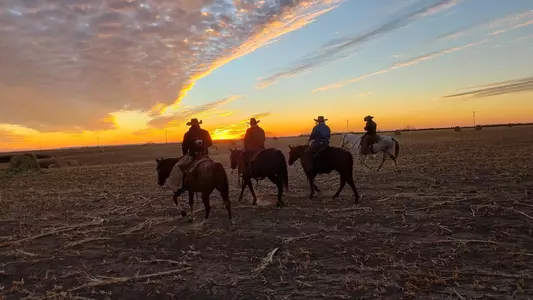
Kristin (Tanney) Cloud believed she had to act fast. Kristin lives with husband Brett on CT5 Ranch in Benton, Kansas, on land that was originally homesteaded in 1877, and the Clouds specialize in ranch horse training and breeding, riding lessons, Extreme Cowboy, competitive trail, show, and they specialize in breaking, training, and breeding quality mounts for ranch work.
About 2 ½ hours up I-135 North and I-70 West, strong winds as high as 100 miles-per-hour ravaged Russell County on Wednesday, December 15, causing massive blazes that stretched over 400,000 acres of pasture, destroying homes, vehicles, barns, equipment, pets and killing thousands of head of cattle. Smoke travelled some 600 miles overnight and could be smelled in Chicago.
At the epicenter seemed to be Paradise, Kansas. The Kansas Reflector reported that unseasonably warm temperatures, extreme winds and weeks without rain left north-central Kansas at high risk for fires. More than a dozen families lost their homes due to the sweeping wildfires in the area.
Kristin took it upon herself to travel to Russell County. She wanted to help people and she wanted to help them recover their cattle. She knew she would want assistance if faced with a similar tragedy. That's what ranchers do, regardless the distance. They stick together.
"I spent an hour trying to figure out how to be helpful out there, and loaded up," Kristin said. "I drove out there to see if I could help people if they needed it. I knew the cattle were going to be stressed and they don't handle well when they're stressed. Handling stressed cattle is a talent me and my husband have, and I figured I could assist over there."

Kristin was a member of the Kansas State equestrian team. She graduated in 2005.
Brett stayed behind to tend to their cattle. Kristin went on a journey to help.
"The closer you got to Paradise, the less that was left," she said. "You could tell everything was so hot with the 100 mile-per-hour wind gusts. It burned up all the fuel, all the grass, all the trees. Houses were piles of rubble still smoldering. Powerlines were burnt off, poles had snapped off, and there were downed powerlines everywhere. There was no way the land wouldn't catch fire with all the powerlines down everywhere."
Soon, Kristin reached the outskirts of ranches and spotted what no cowboy ever wants to see: dead cattle, or "deads," as they're called. There were deads in the ditches from cattle that tried to escape and pressed together so hard that the fence busted. There were deads in the middle of fields.
She drove until she found some people. She drove to the elevator in Paradise. It proved difficult to identify who needed the most help. The devastation was all around.
"Everyone was so overwhelmed, they didn't have a game plan," she said. "You'd ask, 'How can I help?' and they couldn't tell you how. It was just overwhelming. They were still trying to formulate a plan of how to help the cattle."
Eventually, she found people to help.
"I helped a couple different ranchers," she said. "At one ranch, there were 25 cattle. The next ranch's set of cattle was probably 60 pairs — 60 cows, 60 calves and a couple of bulls that we moved. I know at least half of them had to be put down when they ran them through the chute to determine if they were going to make it. And that was just what was left. We gathered the rest and you saw ones that had eyes burnt, bellies burnt, legs burnt, and some of their hooves were about to come off. They were suffering."

Kristin helped out around Russell County until December 18.
"As far as handling, a lot of what you do with a horse to move cattle and get them to go in the direction you want them to have to do with putting pressure on them with your presence," she said. "When these cattle have been through trauma like that, they're overstimulated, hurting, uncomfortable, tired and hungry. When we have problems like that ourselves, we don't always think the best we can, and we don't always react to stimuli in a normal way. It's important to have people out there who know how to handle cattle and not to make the situation more stressful for them.
"I just wanted to help people who needed it."
On December 21, the K-State Athletic Department announced that its football program will wear a special decal on the back of its helmets for the TaxAct Texas Bowl in support of Kansans who were affected by the wildfires.
"Our thoughts and prayers are with the many Kansans who were affected by the recent storms and wildfires," Athletics Director Gene Taylor said. "This helmet sticker is a small department-wide gesture that will let all K-Staters and those affected by this storm know that we are with them as they rebuild their lives and livelihoods."
Kristin (Tanney) Cloud believed she had to act fast. Kristin lives with husband Brett on CT5 Ranch in Benton, Kansas, on land that was originally homesteaded in 1877, and the Clouds specialize in ranch horse training and breeding, riding lessons, Extreme Cowboy, competitive trail, show, and they specialize in breaking, training, and breeding quality mounts for ranch work.
About 2 ½ hours up I-135 North and I-70 West, strong winds as high as 100 miles-per-hour ravaged Russell County on Wednesday, December 15, causing massive blazes that stretched over 400,000 acres of pasture, destroying homes, vehicles, barns, equipment, pets and killing thousands of head of cattle. Smoke travelled some 600 miles overnight and could be smelled in Chicago.
At the epicenter seemed to be Paradise, Kansas. The Kansas Reflector reported that unseasonably warm temperatures, extreme winds and weeks without rain left north-central Kansas at high risk for fires. More than a dozen families lost their homes due to the sweeping wildfires in the area.
Kristin took it upon herself to travel to Russell County. She wanted to help people and she wanted to help them recover their cattle. She knew she would want assistance if faced with a similar tragedy. That's what ranchers do, regardless the distance. They stick together.
"I spent an hour trying to figure out how to be helpful out there, and loaded up," Kristin said. "I drove out there to see if I could help people if they needed it. I knew the cattle were going to be stressed and they don't handle well when they're stressed. Handling stressed cattle is a talent me and my husband have, and I figured I could assist over there."
Kristin was a member of the Kansas State equestrian team. She graduated in 2005.
Brett stayed behind to tend to their cattle. Kristin went on a journey to help.
"The closer you got to Paradise, the less that was left," she said. "You could tell everything was so hot with the 100 mile-per-hour wind gusts. It burned up all the fuel, all the grass, all the trees. Houses were piles of rubble still smoldering. Powerlines were burnt off, poles had snapped off, and there were downed powerlines everywhere. There was no way the land wouldn't catch fire with all the powerlines down everywhere."
Soon, Kristin reached the outskirts of ranches and spotted what no cowboy ever wants to see: dead cattle, or "deads," as they're called. There were deads in the ditches from cattle that tried to escape and pressed together so hard that the fence busted. There were deads in the middle of fields.
She drove until she found some people. She drove to the elevator in Paradise. It proved difficult to identify who needed the most help. The devastation was all around.
"Everyone was so overwhelmed, they didn't have a game plan," she said. "You'd ask, 'How can I help?' and they couldn't tell you how. It was just overwhelming. They were still trying to formulate a plan of how to help the cattle."
Eventually, she found people to help.
"I helped a couple different ranchers," she said. "At one ranch, there were 25 cattle. The next ranch's set of cattle was probably 60 pairs — 60 cows, 60 calves and a couple of bulls that we moved. I know at least half of them had to be put down when they ran them through the chute to determine if they were going to make it. And that was just what was left. We gathered the rest and you saw ones that had eyes burnt, bellies burnt, legs burnt, and some of their hooves were about to come off. They were suffering."
Kristin helped out around Russell County until December 18.
"As far as handling, a lot of what you do with a horse to move cattle and get them to go in the direction you want them to have to do with putting pressure on them with your presence," she said. "When these cattle have been through trauma like that, they're overstimulated, hurting, uncomfortable, tired and hungry. When we have problems like that ourselves, we don't always think the best we can, and we don't always react to stimuli in a normal way. It's important to have people out there who know how to handle cattle and not to make the situation more stressful for them.
"I just wanted to help people who needed it."
On December 21, the K-State Athletic Department announced that its football program will wear a special decal on the back of its helmets for the TaxAct Texas Bowl in support of Kansans who were affected by the wildfires.
"Our thoughts and prayers are with the many Kansans who were affected by the recent storms and wildfires," Athletics Director Gene Taylor said. "This helmet sticker is a small department-wide gesture that will let all K-Staters and those affected by this storm know that we are with them as they rebuild their lives and livelihoods."

K-State Volleyball | 2026 Spring College Showcase - Omaha
Monday, April 27
K-State Football | Coach Collin Klein First Pitch
Sunday, April 26
K-State Track & Field | Oregon Team Invitational Recap
Thursday, April 23
K-State Football | Collin Klein Press Conference - April 22, 2026
Wednesday, April 22