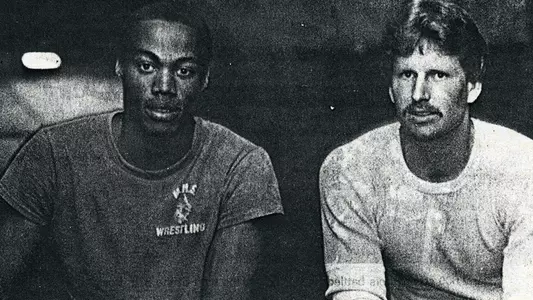
SE: Former K-State Track Star Returns as Author & Mental Health Advocate
May 14, 2021 | Track & Field, Sports Extra
By: Austin Siegel
The man holds the oldest individual track record in K-State history. Most of the kids he talks to don't even realize it.
That's because when Julius Mercer tells his story, everything that happened after the greatest moment of his athletic career is just as important.
"I risk being vulnerable," Mercer said. "But I speak in that way because some of the people in the audience might be struggling."
He appears at events like Prevent Suicide Wisconsin and middle schools around his hometown of Chicago. He talks about periods of homelessness, time in prison and waking up in a hospital.
But Julius Mercer is still here. And he's doing more with his second chance than most people have ever done with a school record.
Mercer will be back in Manhattan this weekend signing copies of his book "A New Fire," at The Dusty Bookshelf from 12 p.m. to 2 p.m. on Saturday and Kite's Bar and Grill from 12 to 3 p.m. on Sunday.
The book covers Mercer's rise to become one of the best track & field athletes in K-State history and the challenges with mental health and suicide that nearly derailed his life.
Growing up in the Chicago suburbs, Mercer was a baseball and basketball player without any ambitions on the track. In 1977, his brother talked him into going out for the high school team.
"This was a gravel track and my coach put a hurdle down and told me to jump over it. He told me, 'You're going to be a hurdler.' That's how it all started," Mercer said. "My senior year, I was undefeated."
Though he was a district champion in the Chicago suburbs, Mercer didn't make it out of the preliminaries at the Illinois state meet. Combined with a poor GPA, Mercer figured his track career was over and found work at a local golf course.
One afternoon, driving the tractor that picked up golf balls on the driving range, he bumped into a track coach from a rival high school.
"He was like, 'Son, why are you here? Your athleticism could get you a college scholarship.' I had no idea," Mercer said. "My grades were so bad I didn't believe I could handle college."
But that coach had a connection at Butler Community College in El Dorado. In a newspaper article from his college days, Mercer said he decided to "take a chance in the land of Oz."

After two seasons at the JUCO level, Mercer earned a full track scholarship to K-State, where he met a newly arrived track & field coach who would change his life.
Steve Miller coached track in the same Chicago suburbs where Mercer began his high school career, but the two never crossed paths until they both arrived in Manhattan.
While Miller would go on to become K-State athletic director, hire a football coach named Bill Snyder and spend nine years as a Nike executive, one of his first challenges was helping Mercer find his way in Manhattan. The junior had flunked out of school shortly after arriving at K-State.
"When I made it back, it surprised him, but he was able to give me a partial scholarship," Mercer said. "When my academics increased, Miller saw me run a few times and said, 'Man, if you stop smoking weed and stick with this program, you could make the Olympic team.'"
At that time, Edwin Moses was the king of the 400m hurdles in the United States. To get to that level, Miller asked Mercer to train with the middle-distance runners at K-State.
"They took me out to the dirt roads and man, I ran six miles, and it was hell," Mercer said. "But they helped me get through it. From that day forward, I started running six miles once a week and just kept getting stronger."
Mercer won a Big 8 championship in the 400m hurdles, finished third in the country at the NCAA Championship and reached the doorstep of the Summer Olympics.
But his bid ended at the 1984 U.S. Olympic Trials in Los Angeles.
At the LA Coliseum, Moses and Danny Harris took the top two spots in the 400m hurdles, just a few months before taking the gold and silver medal in the same stadium at the 1984 Games.
It was disappointing, but Mercer wasn't deterred. He moved to Los Angeles after college to continue training and start his career working in social services. That's when he began to encounter the mental health struggles that marked the biggest challenge of his life.
"I didn't want to tell anybody I was scared," he said. "Back then they didn't use the word 'stigma,' but I know now that I was suffering in silence. I was holding on to so much stress without intervention."
A period of what he described as erratic behavior and auditory hallucinations culminated with a suicide attempt when Mercer was 27 years old.
"It was a sickness that I never treated," he said.
Mercer briefly regained control thanks to a change of scenery, as he moved back home to Chicago. But the end of his marriage and loss of his father brought on the same challenges.
"I didn't care about life anymore, which led to drug addiction, theft and burglaries. Ultimately, that led to two and half decades in and out of jail," Mercer said. "About 12 years ago, the last time I was incarcerated, I was tired of losing. Then, I got lucky."
Mercer met a group of mental health professionals, who noticed his background as a college graduate and a former runner with Olympic ambitions. He began to make the connection between his addiction and mental health struggles.

Writing helped Mercer process his experiences and became the root of his new book. He has also discovered former teammates who endured similar challenges in silence.
"One of my former teammates at K-State who donated to my campaign, he told me that when he was at K-State he had very bad depression. I never knew this," Mercer said. "Now, he's gotten help and told me how important this message is for student-athletes."
Mercer now works at the Illinois Institute of Technology where he provides mental health resources and sits on a transitional medicine council at the University of Chicago.
Some of the most rewarding connections have been those that Mercer rekindled with members of the K-State Track & Field community.
"I call Steve Miller up about twice a month," Mercer said. "He gives me tips about speaking, motivation and how to be about your message. He's mentored me through all of this."
The fact is, a K-State athlete might come along one day and break Mercer's four-decade-old record in the 400m hurdles.
Julius Mercer, the mental health advocate, is still going to be here.
"It's difficult to do it ourselves sometimes," he said. "I broke through by removing stigmas and asking for help."
The man holds the oldest individual track record in K-State history. Most of the kids he talks to don't even realize it.
That's because when Julius Mercer tells his story, everything that happened after the greatest moment of his athletic career is just as important.
"I risk being vulnerable," Mercer said. "But I speak in that way because some of the people in the audience might be struggling."
He appears at events like Prevent Suicide Wisconsin and middle schools around his hometown of Chicago. He talks about periods of homelessness, time in prison and waking up in a hospital.
But Julius Mercer is still here. And he's doing more with his second chance than most people have ever done with a school record.
Mercer will be back in Manhattan this weekend signing copies of his book "A New Fire," at The Dusty Bookshelf from 12 p.m. to 2 p.m. on Saturday and Kite's Bar and Grill from 12 to 3 p.m. on Sunday.
The book covers Mercer's rise to become one of the best track & field athletes in K-State history and the challenges with mental health and suicide that nearly derailed his life.
Growing up in the Chicago suburbs, Mercer was a baseball and basketball player without any ambitions on the track. In 1977, his brother talked him into going out for the high school team.
"This was a gravel track and my coach put a hurdle down and told me to jump over it. He told me, 'You're going to be a hurdler.' That's how it all started," Mercer said. "My senior year, I was undefeated."
Though he was a district champion in the Chicago suburbs, Mercer didn't make it out of the preliminaries at the Illinois state meet. Combined with a poor GPA, Mercer figured his track career was over and found work at a local golf course.
One afternoon, driving the tractor that picked up golf balls on the driving range, he bumped into a track coach from a rival high school.
"He was like, 'Son, why are you here? Your athleticism could get you a college scholarship.' I had no idea," Mercer said. "My grades were so bad I didn't believe I could handle college."
But that coach had a connection at Butler Community College in El Dorado. In a newspaper article from his college days, Mercer said he decided to "take a chance in the land of Oz."
After two seasons at the JUCO level, Mercer earned a full track scholarship to K-State, where he met a newly arrived track & field coach who would change his life.
Steve Miller coached track in the same Chicago suburbs where Mercer began his high school career, but the two never crossed paths until they both arrived in Manhattan.
While Miller would go on to become K-State athletic director, hire a football coach named Bill Snyder and spend nine years as a Nike executive, one of his first challenges was helping Mercer find his way in Manhattan. The junior had flunked out of school shortly after arriving at K-State.
"When I made it back, it surprised him, but he was able to give me a partial scholarship," Mercer said. "When my academics increased, Miller saw me run a few times and said, 'Man, if you stop smoking weed and stick with this program, you could make the Olympic team.'"
At that time, Edwin Moses was the king of the 400m hurdles in the United States. To get to that level, Miller asked Mercer to train with the middle-distance runners at K-State.
"They took me out to the dirt roads and man, I ran six miles, and it was hell," Mercer said. "But they helped me get through it. From that day forward, I started running six miles once a week and just kept getting stronger."
Mercer won a Big 8 championship in the 400m hurdles, finished third in the country at the NCAA Championship and reached the doorstep of the Summer Olympics.
But his bid ended at the 1984 U.S. Olympic Trials in Los Angeles.
At the LA Coliseum, Moses and Danny Harris took the top two spots in the 400m hurdles, just a few months before taking the gold and silver medal in the same stadium at the 1984 Games.
It was disappointing, but Mercer wasn't deterred. He moved to Los Angeles after college to continue training and start his career working in social services. That's when he began to encounter the mental health struggles that marked the biggest challenge of his life.
"I didn't want to tell anybody I was scared," he said. "Back then they didn't use the word 'stigma,' but I know now that I was suffering in silence. I was holding on to so much stress without intervention."
A period of what he described as erratic behavior and auditory hallucinations culminated with a suicide attempt when Mercer was 27 years old.
"It was a sickness that I never treated," he said.
Mercer briefly regained control thanks to a change of scenery, as he moved back home to Chicago. But the end of his marriage and loss of his father brought on the same challenges.
"I didn't care about life anymore, which led to drug addiction, theft and burglaries. Ultimately, that led to two and half decades in and out of jail," Mercer said. "About 12 years ago, the last time I was incarcerated, I was tired of losing. Then, I got lucky."
Mercer met a group of mental health professionals, who noticed his background as a college graduate and a former runner with Olympic ambitions. He began to make the connection between his addiction and mental health struggles.
Writing helped Mercer process his experiences and became the root of his new book. He has also discovered former teammates who endured similar challenges in silence.
"One of my former teammates at K-State who donated to my campaign, he told me that when he was at K-State he had very bad depression. I never knew this," Mercer said. "Now, he's gotten help and told me how important this message is for student-athletes."
Mercer now works at the Illinois Institute of Technology where he provides mental health resources and sits on a transitional medicine council at the University of Chicago.
Some of the most rewarding connections have been those that Mercer rekindled with members of the K-State Track & Field community.
"I call Steve Miller up about twice a month," Mercer said. "He gives me tips about speaking, motivation and how to be about your message. He's mentored me through all of this."
The fact is, a K-State athlete might come along one day and break Mercer's four-decade-old record in the 400m hurdles.
Julius Mercer, the mental health advocate, is still going to be here.
"It's difficult to do it ourselves sometimes," he said. "I broke through by removing stigmas and asking for help."


K-State Men's Basketball | Postgame Press Conference at Colorado
Thursday, February 26
K-State Rowing | Media Day
Tuesday, February 24
K-State Rowing | Weights Practice
Tuesday, February 24
K-State Tennis | Weekend Recap vs Old Dominion & Minnesota
Tuesday, February 24