SE: Inside the Women Leaders in Sports Program at K-State Athletics
May 21, 2021 | Soccer, Track & Field, Sports Extra
By: Austin Siegel
The K-State Athletics chapter of the Women Leaders in Sports program is one of the most unique organizations within the athletic department, pairing female athletes with athletic staff mentors and hosting social and career-development events for women throughout the year.
As the 50th anniversary of Title IX approaches in 2022, programs like this are more important than ever – even as the landscape of college athletics continues to change.
Here is the story of the Women Leaders in Sports program from the Wildcats who help make it possible.
Macy Heinz, K-State Track & Field: I think when you're a student-athlete, it's hard to find times to volunteer and network because we have busy schedules already. Throw COVID-19 into the mix and it feels nearly impossible.
Rachel Harris, K-State Soccer: It's definitely hard right now with virtual stuff throughout the semester…I think getting to know people in sports and within the athletic department can play a big role if that's something you want to do later in life.
Kristin Waller, Associate AD of Student-Athlete Services/Deputy Title IX Coordinator: We want to make sure our women student-athletes are getting the best out of their experience…I think that's really the mission: How can we make an impact but not add a burden to schedules with another meeting, both from a student-athlete and a staff perspective?
Mary Gorman, Administrative Assistant: Sports is such an opportunity to grow as a person. The things you learn about discipline, commitment, performance and identity, those all impact the rest of your life. But your identity as an athlete is only one part of your life.
Waller: Arin Dunn, who was our previous director of student-athlete development, this idea came out of our Diversity and Inclusion Excellence Plan and slowly started as a mentor opportunity. Names of different student-athletes came from different coaches and counselors. From a mentor standpoint, I got asked to do it and definitely wanted to help.
Cecilia Striler, Associate Director of Marketing: I just got a mentee, Rachel Harris on the soccer team. It's nice since I'm on the external side of the department, connecting with someone more internal has been nice. I'm from the Midwest and she's from California. I've been at K-State my entire career and she was at Arkansas before she came here. I feel like I'm learning just as much from her as she is from me.
Harris: She's another person out there that I know and get to have that connection with - what she's done, her experience in her job and her college experience is such a nice outlet. It's nice to have somebody to talk to who's not involved [in the soccer program] every single day.

Waller: When it first started it was kind of a smaller group. Our first event with student-athletes was the fall before COVID started…We were very deliberate in that first interaction of trying to divide people up and make sure it wasn't just clusters of people from the same team.
Heinz: My courses this semester have been completely online and because of that I feel like I haven't made a ton of connections with professors or classmates. Especially in the latter half of my college career, it's more important to make those connections. My mentor, Mary, is in a Communications career, which is one of my fields of study. She's provided a really awesome perspective and been a guide and mentor.
Gorman: I think the mentor program is a really great idea, because student-athletes have this world of their teammates, coaches and staff who they see all the time, but especially if they're doing online classes, it's a place to connect with other people.
Waller: One of the other cool things we've done is sports swaps, where anyone who wanted could go to rowing and experience some rowing instruction on the ergs. We did a trip over to the Ice Family Basketball Center and had student-athletes shoot and play around. We tried to be deliberate and intentional in helping them understand that you're all experiencing the same thing. You're in this together.
Harris: When our Director of Operations took a new job, I took over in that role for our team. Coach Dibbini was like, "I want you to be around the team this season and travel with us." It was crazy but it was really cool to experience how much work Chelsey [Frihart] actually did for our program. I was talking to Cecilia about that, and she was like, "I can put you in contact with some of the people that I know." She's awesome.
Striler: I enjoy learning about her day-to-day stuff. She just had surgery so learning what her daily PT looks like and how she's working to get back. Our role is more about, "How do we sell stuff?" so it's nice to bridge that gap. She's also the same major that I was and in the same college, so it's interesting to hear how things in the College of Business have changed.
Waller: It's about lifting each other up and building each other up. We're starting to have interactions that happen organically, like the golfers had a group of rowers out at Colbert Hills and they just did that on their own. When some of those things start to develop naturally, it's like a fist pump.
Gorman: ESPN had a really good Women Leaders segment that we watched, just about what it's like to be a female in sports, from an athlete's side, a professional's side and then what does life look like after you're done with sports. We talked a lot about that and how sports can grow you as a person and prepare you for life after college if you're not competing anymore.
Heinz: It helps provide some structure since we're completely online. I was home for a while too, so I felt completely disconnected from the whole athletic department. It was a way to connect back to what's going on here at the department.
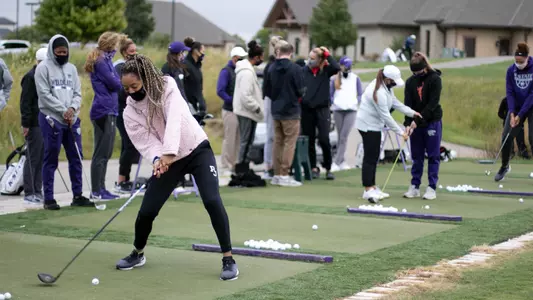
Striler: K-State gives us all the opportunity to sign up for the National Women Leaders in College Sports program and they cover the cost. After seeing what the national program does, it's nice to be a unit here and put things into play. There's not a ton of women here, so it's nice to touch base and hang out with each other outside of work. It doesn't even have to be talking about sports, but just something like going to the driving range and hitting golf balls. It can be a social thing.
Waller: COVID-19 has been a lot of emails and text messages. From my end, we're just checking in with student-athletes, getting updates and feedback. Student-athletes want the social piece, but when you're sitting more on the adult side, you're like, "Really? You don't want panels? You don't want to hear best practices or how to overcome professional challenges?" So, we have blogs and videos from the ESPNW Summit. As a staff member, you usually nerd out on that stuff a little bit, but it's important to find that balance between social interaction and professional development so that everyone takes away something they can use every day.
Harris: You have to put yourself out there. I think we're going to have an event with everybody in the fall, but it's definitely hard right now. I'm hoping as COVID-19 slowly starts to become less big of a deal we can get back to more in-person events.

Heinz: I'm in the process of narrowing down what I want to focus on in my career. As a student-athlete, it's a little harder to job shadow, so I'm looking for any experience to shadow, do an internship or talk to somebody who's in a career that I'm interested in. So, I don't know exactly what I want to do yet, but these experiences are helping me to do that.
Striler: From my end, it makes it a little more personal when you learn about the student-athletes that you're trying to promote. I remember when I talked to Peyton Williams, I was like "I'm always putting you on stuff," but hearing different tidbits about her and her life outside basketball made me more excited to share her with our fans and make sure that our fans know more about her.
Gorman: The perspective that you're more than just an athlete, that's something Macy and I have talked about a few times along the way. Now it's just about taking the skills you have as an athlete and those lessons you learned into the life you have ahead of you.
Heinz: Mary and I have talked about how athletics can be so male dominated, so being a woman in sports, what sort of significance does that hold? In her role, covering athletes and sports at K-State, which is also pretty male dominated, we've talked about the importance of how we carry ourselves and what our roles mean to the greater scheme of women in sports.
Striler: I've been a K-State fan my whole life and watching student-athletes is great, but this helps me feel even more passionate about what I'm promoting. Not just about the sport, but the student-athletes themselves.
The K-State Athletics chapter of the Women Leaders in Sports program is one of the most unique organizations within the athletic department, pairing female athletes with athletic staff mentors and hosting social and career-development events for women throughout the year.
As the 50th anniversary of Title IX approaches in 2022, programs like this are more important than ever – even as the landscape of college athletics continues to change.
Here is the story of the Women Leaders in Sports program from the Wildcats who help make it possible.
Macy Heinz, K-State Track & Field: I think when you're a student-athlete, it's hard to find times to volunteer and network because we have busy schedules already. Throw COVID-19 into the mix and it feels nearly impossible.
Rachel Harris, K-State Soccer: It's definitely hard right now with virtual stuff throughout the semester…I think getting to know people in sports and within the athletic department can play a big role if that's something you want to do later in life.
Kristin Waller, Associate AD of Student-Athlete Services/Deputy Title IX Coordinator: We want to make sure our women student-athletes are getting the best out of their experience…I think that's really the mission: How can we make an impact but not add a burden to schedules with another meeting, both from a student-athlete and a staff perspective?
Mary Gorman, Administrative Assistant: Sports is such an opportunity to grow as a person. The things you learn about discipline, commitment, performance and identity, those all impact the rest of your life. But your identity as an athlete is only one part of your life.
Waller: Arin Dunn, who was our previous director of student-athlete development, this idea came out of our Diversity and Inclusion Excellence Plan and slowly started as a mentor opportunity. Names of different student-athletes came from different coaches and counselors. From a mentor standpoint, I got asked to do it and definitely wanted to help.
Cecilia Striler, Associate Director of Marketing: I just got a mentee, Rachel Harris on the soccer team. It's nice since I'm on the external side of the department, connecting with someone more internal has been nice. I'm from the Midwest and she's from California. I've been at K-State my entire career and she was at Arkansas before she came here. I feel like I'm learning just as much from her as she is from me.
Harris: She's another person out there that I know and get to have that connection with - what she's done, her experience in her job and her college experience is such a nice outlet. It's nice to have somebody to talk to who's not involved [in the soccer program] every single day.
Waller: When it first started it was kind of a smaller group. Our first event with student-athletes was the fall before COVID started…We were very deliberate in that first interaction of trying to divide people up and make sure it wasn't just clusters of people from the same team.
Heinz: My courses this semester have been completely online and because of that I feel like I haven't made a ton of connections with professors or classmates. Especially in the latter half of my college career, it's more important to make those connections. My mentor, Mary, is in a Communications career, which is one of my fields of study. She's provided a really awesome perspective and been a guide and mentor.
Gorman: I think the mentor program is a really great idea, because student-athletes have this world of their teammates, coaches and staff who they see all the time, but especially if they're doing online classes, it's a place to connect with other people.
Waller: One of the other cool things we've done is sports swaps, where anyone who wanted could go to rowing and experience some rowing instruction on the ergs. We did a trip over to the Ice Family Basketball Center and had student-athletes shoot and play around. We tried to be deliberate and intentional in helping them understand that you're all experiencing the same thing. You're in this together.
Harris: When our Director of Operations took a new job, I took over in that role for our team. Coach Dibbini was like, "I want you to be around the team this season and travel with us." It was crazy but it was really cool to experience how much work Chelsey [Frihart] actually did for our program. I was talking to Cecilia about that, and she was like, "I can put you in contact with some of the people that I know." She's awesome.
Striler: I enjoy learning about her day-to-day stuff. She just had surgery so learning what her daily PT looks like and how she's working to get back. Our role is more about, "How do we sell stuff?" so it's nice to bridge that gap. She's also the same major that I was and in the same college, so it's interesting to hear how things in the College of Business have changed.
Waller: It's about lifting each other up and building each other up. We're starting to have interactions that happen organically, like the golfers had a group of rowers out at Colbert Hills and they just did that on their own. When some of those things start to develop naturally, it's like a fist pump.
Gorman: ESPN had a really good Women Leaders segment that we watched, just about what it's like to be a female in sports, from an athlete's side, a professional's side and then what does life look like after you're done with sports. We talked a lot about that and how sports can grow you as a person and prepare you for life after college if you're not competing anymore.
Heinz: It helps provide some structure since we're completely online. I was home for a while too, so I felt completely disconnected from the whole athletic department. It was a way to connect back to what's going on here at the department.
Striler: K-State gives us all the opportunity to sign up for the National Women Leaders in College Sports program and they cover the cost. After seeing what the national program does, it's nice to be a unit here and put things into play. There's not a ton of women here, so it's nice to touch base and hang out with each other outside of work. It doesn't even have to be talking about sports, but just something like going to the driving range and hitting golf balls. It can be a social thing.
Waller: COVID-19 has been a lot of emails and text messages. From my end, we're just checking in with student-athletes, getting updates and feedback. Student-athletes want the social piece, but when you're sitting more on the adult side, you're like, "Really? You don't want panels? You don't want to hear best practices or how to overcome professional challenges?" So, we have blogs and videos from the ESPNW Summit. As a staff member, you usually nerd out on that stuff a little bit, but it's important to find that balance between social interaction and professional development so that everyone takes away something they can use every day.
Harris: You have to put yourself out there. I think we're going to have an event with everybody in the fall, but it's definitely hard right now. I'm hoping as COVID-19 slowly starts to become less big of a deal we can get back to more in-person events.
Heinz: I'm in the process of narrowing down what I want to focus on in my career. As a student-athlete, it's a little harder to job shadow, so I'm looking for any experience to shadow, do an internship or talk to somebody who's in a career that I'm interested in. So, I don't know exactly what I want to do yet, but these experiences are helping me to do that.
Striler: From my end, it makes it a little more personal when you learn about the student-athletes that you're trying to promote. I remember when I talked to Peyton Williams, I was like "I'm always putting you on stuff," but hearing different tidbits about her and her life outside basketball made me more excited to share her with our fans and make sure that our fans know more about her.
Gorman: The perspective that you're more than just an athlete, that's something Macy and I have talked about a few times along the way. Now it's just about taking the skills you have as an athlete and those lessons you learned into the life you have ahead of you.
Heinz: Mary and I have talked about how athletics can be so male dominated, so being a woman in sports, what sort of significance does that hold? In her role, covering athletes and sports at K-State, which is also pretty male dominated, we've talked about the importance of how we carry ourselves and what our roles mean to the greater scheme of women in sports.
Striler: I've been a K-State fan my whole life and watching student-athletes is great, but this helps me feel even more passionate about what I'm promoting. Not just about the sport, but the student-athletes themselves.
Players Mentioned
GK
/ Soccer
/ Track & Field
K-State Rowing | Media Day
Tuesday, February 24
K-State Rowing | Weights Practice
Tuesday, February 24
K-State Tennis | Weekend Recap vs Old Dominion & Minnesota
Tuesday, February 24
K-State Track and Field | Sights & Sounds Steve Miller Invitational
Monday, February 23